Category Archives: General Archery Chat

Is it legal to shoot a Welshman with an arrow?

Occasionally, I let slip that I spent a decent chunk of my life living in Wales. As I teach archery, this commonly leads to the question of whether it’s legally sound to shoot a Welshman with a longbow in Chester or Herefordshire or whichever town or county the questioner can think of that borders Wales or Scotland. Occasionally, extra parameters are added: “It’s fine as long as you’re near the cathedral at midnight and you shoot exactly 12 yards”. That sort of thing.

This idea is so prevalent that even the people that run the country—or at least want to run the country—sometimes get confused. But is it actually legal?

The short answer is, somewhat obviously: no, it isn’t legal. Historic royal decrees and the wobbly process of defining a British person as legally Welsh, English or Scottish aside, murder is still murder, even when it’s perpetuated on the Welsh.

The longer answer is that it was never really a fully fledged law to begin with, and that even if it had been it’s been totally superseded. There are a few theories about how this urban myth came about, but the most likely theory seems to be somewhat ironically based around a decree written by the Prince of Wales. The Prince of Wales in 1403, that is; not the current incumbent.

It is a matter of historical record that the English and Welsh (and Scottish) have not always seen eye to eye. Despite Welsh archers being common in English armies (including during the famous so-called English victory against the French at Agincourt), loyalties to the Crown were largely dependent on what year it was and who nominally governed any given piece of land.

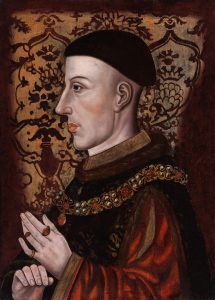
In the early fifteenth century, Prince Henry of Monmouth, Prince of Wales and Earl of Chester, was concerned about Welsh uprisings in and around Chester. Sir Henry ‘Hotspur’ Percy had defected to join forces with Owain Glyndŵr, who was busy causing trouble for the English throughout Wales. Percy and Glyndŵr were unhappy with the then-King Henry IV, who had usurped the throne from Richard II.

During the Battle of Shrewsbury in 1403, Percy was killed by an arrow to the face. Prince Henry was nearly done for in the same way, but he was saved and left with a permanent scar. Worried about the possibility of further defection to the Welsh cause, Prince Henry (who later became King Henry V) decreed that there should be a curfew on Welshmen in Chester:

“…all manner of Welsh persons or Welsh sympathies should be expelled from the city; that no Welshman should enter the city before sunrise or tarry in it after sunset, under pain of decapitation.”

Welshmen were required to leave their weapons at the town gates and not congregate in groups of three or more. And shooting a Welshman in Chester? Archery was never specifically mentioned in the Prince’s request, at least not that anyone seems to be able to reliably report.
A few years later in 1408, the citizens of Chester elected a Welsh mayor, John Ewloe. There were periodic troubles between Ewloe’s allies and the constable of the castle, William Venables, but these came to an end in 1411 when Venables was forced to pay reparations to certain citizens of the city. In short, Chester itself didn’t have a bone to pick with the Welsh.

In summary: don’t shoot a Welshman with an arrow, even if the person asking you to do so was born in Monmouth and is the reigning Prince of Wales.
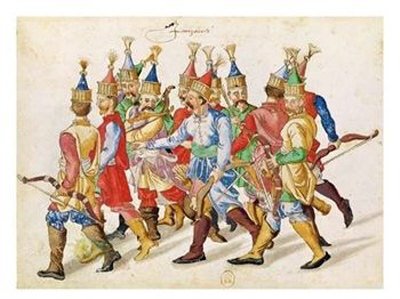
Janissaries Archers

The protectors of the Sultan
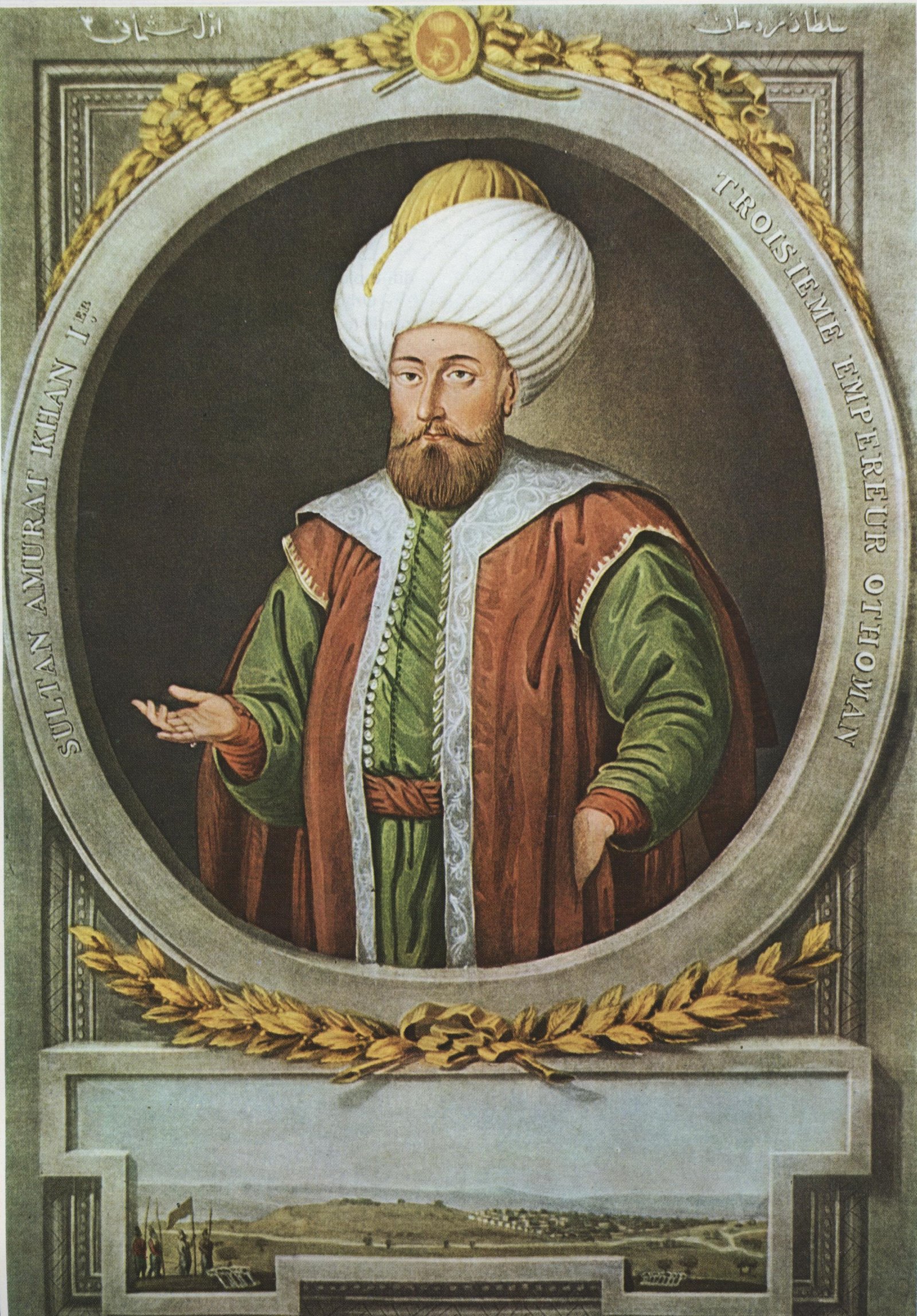
The Janissaries archers were elite infantry units created by sultan Murad I, the first sultan of the Ottoman empire, in 1383.

Murad I

They began as an elite corps of slaves recruited from young Christian boys from the Balkans and Anatolian through the devşirme system, abolished in 1638. Turkish children nor Jews were never subject to devşirme. Later on, the Janissaries could enrol their own children in the corps after the devşirme system was abolished by sultan Murad III.

They wore unique uniforms, were paid, marched to music, lived in barracks and were the first corps to make extensive use of fire arms. During the initial period of formation, Janissaries were expert archers, but they began adopting firearms as soon as they became available during the 1440s. They also served as policemen, palace guards and fire fighters in peace time.

Recruitment
After a non-muslim boy was recruited, he was sent to selected Turkish families to learn how to speak Turkish, the rules of Islam and the customs and cultures of Ottoman society. After this, boys were trained in Enderun school at the capital city. They were selected for their talents in different areas to train as engineers, artisans, riflemen, clerics, archers, artillery, etc. They trained under strict discipline and in practically monastic conditions. Unlike other muslims, they were expressly forbidden to wear beards, only a moustache.
For all practical purposes, Janissaries belonged to the sultan and they were regarded as the protectors of the throne and the sultan. They were taught to consider the corps their family and the sultan their father.

janissaries

The corps
The corps was organised in ortas (equivalent to a battalion). While the sultan was the supreme commander of the Ottoman army and of the Jannissaries in particular, the corps was organised and led by a commander. The corps was divided into 3 sub-corps:
– The cemaat, frontier troops with 101 ortas.
– The beyliks or beulukus, the sultan’s own bodyguard with 61 ortas.
– The sekban or seirnen, with 34 ortas.

The ottoman empire used the Janissaries in most of its campaigns, including the capture of Constantinople, the defeat of the Egyptian Mamluks and war against Hungary and Austria. They were always led to battle by the sultan and had a share of the loot. In battle, their mission was to protect the sultan.

The corps was abolished in 1826 by sultan Mahmud II. The main reason for their decline seemed to be a decrease in discipline as they’d grown accustomed to a civilian life.


How to make a basic longbow from scratch

Common wood used to make bows:
– Red Oak
– Yew
– Ash
– Bamboo
– Osage
– Ipe
– Black Locust

To make a longbow, our best options is yew. Although it is quite expensive is ideal for longbows.

The #1 rule when making any bow, is not to use power tools. This slows down the process a bit, but makes it more difficult to make fatal mistakes.

Common tools used to make bows:
– Draw knife
– Spoke shave
– Cabinet scrapers
– Fine wood file
– Sandpapers

The first thing we need to do is the initial shaping of the bow. We have bought a piece of wood which doesn’t look like a bow at all. Most of the wood will need to be removed and it will be done in this initial shaping stage.
Once you’ve removed around 2lb of wood, you’ll need to draw a central line and the rough outline of the bow as a guide.
The main characteristic of this stage is that, at the end of it, you will be able to see the shape of the bow but the wood would be still too thick to bend.
Now it’s time to shape the longbow. Work from the centre towards the tips. Define the D shaped cross section. Define the cuts for the bowstring to fit in and define the handling area.
The only thing remaining is to check the draw length which should be 28″ as standard.
To know your draw length, you have to put your arms away in the shape of a “T”. One person has to measure from middle finger on the right hand to the middle finger on the left hand. Divide the resulting number by 2.5 to know your draw length.

Here are a couple of extended guides on how to make your own longbow:
– http://www.instructables.com/id/How-to-make-a-layered-oak-bow-or-How-NOT-to-make-/?ALLSTEPS
– http://www.instructables.com/id/How-to-make-a-red-oak-bow-start-to-finish/

– http://poorfolkbows.com/oak.htm

– http://www.greenmanlongbows.co.uk/

What is a World Record Status Shoot?

It must have a National Judge in charge. In the UK the shoot will have been registered with Archery GB. The tournament details are published in Archery UK.


You need to shoot at World Record Status shoots in order to gain a ranking. You can see worldwide rankings on the World Archery website here.


https://worldarchery.org/world-ranking


It is a goal for many people to feature on the Target Archery Rankings for Archery GB. There is a link to the annual rankings on their website here :

http://www.archerygb.org/7499.php


Rankings are determined via points and for ‘recurve archers, the points represent each archer’s best two ladies/gents WA 1440 rounds and best three WA 70m rounds all from shoots with World or UK Record Status; in addition recurve archers are required to shoot an associated Olympic round but the score is not included in the total.

For barebow and longbow archers, the points represent each archer’s best two ladies/gents WA 1440 rounds and best three WA 70m rounds all from shoots with World or UK Record Status.’


As long as you complete this requirement you WILL get a national ranking – which is obviously exciting! In 2016 ladies recurve placed down to position 124. Ladies longbow placed down to 26. Gents recurve placed to position 204 and Gents Barebow to position 18.

What weight bow is needed to shoot 70m?

Well, there are lots of things to take into consideration – you should shoot the highest poundage that you can comfortably control. There is some evidence that you could go as low as around the 30lb mark depending on the following points (see next paragraphs). In my experience most people will be shooting around 36lb+.


In addition to increasing your limb weight (which might involve a few trips to the gym but will definitely involve a lot of practicing with your set up) there are a lot of additional things that you can do to help yourself gain the maximum possible shooting distance for the lowest poundage of limbs. It is easier to shoot more efficient limbs so you may be able to control more weight with less exertion if you spend a bit more money (OK maybe quite a lot more money). For example Border limbs explain it thus, “At Border we offer a synthetic composite core and is denoted by an H in the HEX6.5 (discontinued) and HEX6.6 model series. This offers approximately 4fps to 8fps more arrow speed than their multi-laminated bamboo/wood equivalent. This difference is roughly equivalent to 1lb to 1.5lbs of bow weight performance… the choice of core will not affect the draw-force curve at all, the draw-feel will remain the same irrespective to the core material chosen.”


http://www.borderbows.com/ilf-limbs-by-core-c88.html


Arrows also make a huge difference – the faster and lighter the arrow the further it will easily and accurately go. You want the best spin wings, curly vanes, G nocks and something made out of carbon (you won’t be shooting Jazz arrows at 70m).


Spend a lot of time tuning your bow (we still like the Simon Needham book ‘Steps to Success’ for this). You want the most efficient string (e.g. fast flight) and you’ll want some Beiter nock points.

Why are there two holes for my arrow rest?

Quick info-tel post here. I’ve been asked this question a number of times by beginner archers and I always feel like saying to them, ‘You know we’ll talk about that later.’ And somehow ‘later’ never comes.

So, the answer, of course, is that one is for you to line up your arrow rest into the correct position and the other one is for your pressure button. And what, then, is a pressure button?

The quick answer is that it is a small ‘button’, that pushes through the riser in the middle of your arrow rest which has a spring inside that can be set to be more soft or more firm in order to help fix the archer’s paradox. But, if you’re reading about the archer’s paradox for the first time that doesn’t help much. So, what’s the best way to explain it? As you release your arrow it has to bend to clear it’s way around your riser. Unlike a slingshot where you can pull back the sling and have nothing in the way between the missile and target, with a bow and arrow as you draw the string back and point the arrow at the target you’ll find that you have a riser / bow right in front of where you’re shooting.

So, the arrow needs to bend around the riser – and there are some amazing slow motion videos (especially the ones by Beiter) showing it doing just that. Without a pressure button the arrow will bend as far as it can and as far as it needs to according to how good your release is, how bendable your arrows are (the spine) and the force with which you are releasing them (the weight of the bow).

Installing a pressure button helps to achieve two things – it helps to correct the archer’s paradox (as far as possible) and it helps you to get the perfect ‘tune’ to your arrows by allowing more or less bend in the arrow shaft and it also allows you to set the ‘centre shot’ – basically the optimum position for pointing the arrow down range that will give it the most help to snake its way around the riser.

So, that is the very basic start of an answer about taking your first steps in tuning. For more information I recommend taking a look at The Archer’s Reference Guide (free although they’re grateful for donations) or, if you have a bit of cash to spend and you’re willing to go into some depth, the best book on the subject is Simon Needham’s The Art of Repetition – along with the companion DVD.

Part 1: Getting your first bow? – How do I make this decision among all the choices

What was it that got you into archery in the first place? Were you inspired by Katniss Everdeen from the Hunger Games, watching the Olympics, the competition and social environment of the club or was it something you have always wanted to do and finally came round to doing!  Whatever the reason, there comes a stage where you want to buy your first bow! The excitement and extensive choice, will make one feel like a child in a sweet store. For some it might even be overwhelming, whilst others might become a little on the hyperactive side…

To help you feel that you have a better understanding of what would work for you and complement your style, you should consider the 4 P’s:

Purpose, Progression, Price and Preference.

PURPOSE – What is my purpose and goal of shooting?

There is a big difference between what an Olympic archer would invest in and hobbyist shooting every once in a while in their backyard. There are many reasons why people learn to shoot whether it is for recreation, hunting, to competing at differing levels, from inhouse club competitions to national standards. This will have a significant influence in the style of kit you will buy and many of the features that your require in your bow.

PROGRESSION – How long do you think you will keep the bow for?
A big misconception with new archers is that they need to start with a cheap entry level bow. The reality is that you can skip this, especially if you have been learning using club or rented equipment. Bows are meant to last forever like your sturdy steed, but for different reasons archers will buy other bows. They might want to improve their performance with a more specialized bow or attain a bow that is more personalised (Neon green maybe). Therefore you might want to consider if this bow will give you the ability to progress and how long you can see yourself shooting this style of bow.

PRICE – What is my budget?

Naturally this will make a significant difference on what choices you have when purchasing your first bow. I wouldn’t advise rushing and buying the cheapest bow you can find online, as you might end up feeling ripped-off and even end up tarnishing your experience of archery.We definitely wouldn’t want that happening to you. Yet, you don’t have to burn a hole in your pocket to get a good quality and appropriate bow to fit you!

Depending on how quickly you wish to progress to a new bow (maybe even another style) you might be willing to spend less money than if you wish to invest in a single bow that you will be using for many years down the line (you might even pass it onto your kids!). Remember to include in your budget the required accessories such as arrows, quiver, fingers tabs and bracers which you will need.

Understandably, some people are often afraid to spend a lot of money on a bow, when they are not confident that they will stay with the sport or be cash strapped. A way to cut costs is by going second hand or ebay (see our earlier blog on: www.2020archery.co.uk/blog/should-i-buy-second-hand-archery-gear/ ), but be careful, do your research and ask club members or instructors for advice if you are unsure. Yet the more confident you are with your commitment, the more you will save in the long term with better equipment, as you will begin to develop and grow into a better bow sooner.

PREFERENCE – Is there a particular style you wish to shoot?

Archery has a spectrum of styles and there’s nothing wrong opting for a traditional bow than for a snazzy Olympic recurve. It is important you buy the style of bow you want to use, because at the end of the day you will be shooting it. The bow must feel right from both an aesthetic perspective ( yes that is important many people might not want to shoot a neon green bow) to the functionality for your chosen style of shooting.

Before you click the “buy it now“  button it is important that you consider the above categories and have done your research. The internet is an amazing source of information and so are our club members, instructors and local archery stores (We recommend **** in London). Please remember to check your clubs rules and regulations,before purchasing your bow, as there will be specific guideline on draw weight, types of arrows etc…. that are allowed to be shot.  If you have done your research and are confident about which bow you want, then what are you waiting for!

traditional or freestyle bows

Two Tribes

When you feel that the time has come to buy your own bow, you have a decision to make that goes beyond your income and the distance to the nearest archery shop: traditional or modern?

2020 Archery teaches using a modern style – recurve training bows – and you can stick with the club bows (with no charge!) for as long as you need. But you’ll have seen club members using the full gamut of styles: longbows, flatbows (AKA the “American longbow”), horsebows, Olympic recurves, and the occasional compound bow. Broadly speaking, the former three cover the most popular styles of traditional archery, and the latter two are considered modern.

So what unseen force pushes the novice archer to follow one path over the other?

There was an economic aspect to my decision to go traditional: my first bow, a Buck Trail flatbow, cost around £130. That figure aligned far better with my bank balance than the £200-plus that a recurve could have set me back, even before all the accessories used with freestyle – long rod, V-bars, sights and what have you – were factored in. But even if I’d been feeling more flush, I think I’d still have gone trad. That’s partly because shooting a stick-and-string makes me feel closer to the historical archers I like to learn about, and partly down to a (somewhat masochistic) desire to find out just how far I can go with the uncompensated mechanics of my own body.

I don’t think traditional is in any way superior: it’s a very personal preference. But I was interested in what makes people, as a general rule, choose one school over the other. I was also curious as to how far people grow into their preferred style – how important is your shooting choice to your identity as an archer? Are you an archer who happens to prefer traditional, or are you firmly a Traditional Archer?

“I don’t differentiate between the two”, said Erin. “I’m currently shooting a recurve, but I definitely plan to buy a traditional bow in future.” Erin sees the positives of both: “With my modern bow I’m at the point where I’m confident my arrows will hit the target where I want them to, which is obviously a nice feeling. But I like the idea of trying out a bow that doesn’t have the sights and other accessories, to develop my style.”

Kat shoots a longbow, a style of archery that she’s been drawn to since a child. Her bow is made in the Victorian style – something I’d previously been unaware of, but Kat described a photograph, currently hanging in her hallway, of Victorian ladies shooting similar bows at Crystal Place. Whilst feeling a deep connection to the longbow, Kat has a good practical reason for her choice. “I’m dyspraxic, and the relative simplicity of the longbow suits me for that reason.”

I have oversimplified by defining the choice as simply Traditional versus Modern, of course. There is, at least some kind of, meeting point between the two in the form of recurve barebow and traditional barebow. The former is a good option for those who prefer to shoot a modern recurve, but without sights, stabilisers or draw check indicators. It’s not unusual to see a club member who usually shoots freestyle remove their sights and stabilisers, just to mix things up a bit. On such occasions, their fellow archers may be treated to said archer’s musings on how their “release feels different when I shoot it bare”, which certainly livens up the session. Recurve barebow is recognised by Archery GB in their national rankings, alongside freestyle recurve, compound and longbow.

Recurve traditional is similar to recurve barebow, but requires the use of wooden arrows, alongside a couple of other stipulations.

We also have a few compound shooters in our club. These bows are fast, accurate and comparatively easier to hold at full draw (although, remember that you DO have to pull it through the peak draw weight so you need to be able to control the full weight of the bow). Like recurves, compounds can be shot with or without stabilisers and sights. You can read Archery GB’s detailed explanation of the various bow styles in the Rules of Shooting.

So is tribalism in archery a big thing? Not in our club, it seems. Even those firmly attached to their preferred style have chosen it for personal or practical, not ideological, reasons, and everybody I spoke to expressed an interest in learning about the choices of others. Archers, it seems, are curious folk. In a good way.

But since this is my blog post and I’m a traditionalist, I’m going to end with YouTube archer NUSensei’s fine demonstration of the difference between freestyle and traditional shooting. The defence rests (on the arrow shelf).

If you want to be a record breaker …

On 5 September 2015, Hamish Murray of Swindon, UK, shot 10 arrows into a 40 cm target, from an 18m distance, in just 1 minute and 0.5 second. With a 62 lb longbow. And he was just 17 at the time.

If your reaction to that is less “Ooof” and more “Guard my beverage”, then there’s nothing stopping you from having a go yourself. Murray currently holds the Guinness World Records (GWR) title for “Fastest time to shoot 10 arrows”, which is just one of a whole host of archery titles that GWR monitor.

Other current titles include “Farthest accurate distance (men’s archery)” for which the challenger must shoot an arrow into any scoring ring of a 120cm World Archery target. Which might sound reasonably do-able, until you consider that the current record stands at 283.47 m (930.04 ft). It’s held by US Paralympic legend Matt Stutzman, AKA the @ArmlessArcher, who, as his bio says, does everything with his feet. You might not want to put that beer down just yet. Another archer with proper foot skills is American Nancy Siefker who, standing on her hands and holding the bow with her left foot, shot an arrow into a scoring ring of a 5.5 cm target from a distance of 6.09 m (20 ft). If you fancy having a go at this, be reassured that the rules allow for a larger target than the one Nancy chose – anything up to 12 cm is allowed. Easy.

But in all seriousness, if you’re willing to put in the work you could be in with a shot (yes, I know) at one of the other records. Certain club members – and at this point the Wednesday evening crowd come, unbidden, to mind – might fancy their chances at this one: “Most balloons burst simultaneously by arrows.” The current holder, American Randy Oitker, loaded multiple arrows onto his bow and with this lethal cluster managed to burst seven balloons, pinned to a target, at the same time.

If endurance is your thing, there’s a record for the “Longest archery marathon”. This is pretty much what it sounds like: the longest time to continuously shoot arrows under World Archery conditions (with designated rest breaks allowed, so you can take care of requisite business). That record currently stands at 30 hours and 16 minutes, and is held by Dutch amateur archer Ton van Eekeren. Those who prefer outdoor shooting might like to consider the as-yet unclaimed title for “Highest archery score in 24 hours under World Archery outdoor conditions”.

Another, rather intriguing, record category also currently stands unfilled: “Most bottle caps removed using a bow and arrow in one minute”. That’s pretty much what it sounds like: the most crown cap bottles opened using a bow and arrow in one minute. Anyone taking home that title will not, in all likelihood, have to buy a beer for a very long time.

If none of the above records (and there are a few more on the website) sound like your thing, the GWR team are open to suggestions for new record categories. There are a few criteria to bear in mind if you want to propose a new category, though. One of these is that your proposed record must be based on a “single superlative” – so you could go for farthest, highest, fastest or most, but not a combination of these (so no “Farthest accurate shot whilst doing the loudest burp”, for example). Another important one is that the activity can’t be too niche: it’s got to be something that is currently subject to, or is likely to provoke, international competition. As impressive as it is, no-one is going to accept your suggestion of “Most zombie hostage targets hit by a vaguely hungover South London archer in 30 seconds (female)”.

You can also request that a record be split by gender, if there is justification for this. There’s no reason why women and men shouldn’t compete with each other for “Most balloons burst simultaneously by arrows”, but you could argue that “Heaviest longbow draw weight” – a record which, at 200lb, has remained in the arms of the UK’s Mark Stretton since 2004 could be split into female and male categories.

If you feel like having a go any of these records, you can fill in a short online form on the GWR website. Then, the records management team will send you the guidelines – basically, what conditions must be fulfilled and the quality of evidence they’ll need to see to evaluate your claim. Record verification is taken very seriously by GWR – the majority of archery records listed above must be undertaken using unmodified, World Archery-recognised equipment in the presence of independent expert witnesses registered with either Archery GB or the equivalent nationally-recognised governing body. By “independent”, GWR mean that the witness can’t have any personal investment in the outcome, so you can’t ask the club to do it.

But we will claim it was our training that got you there. Naturally…

Should I buy second hand archery gear?

As we’re coming up to Christmas it seemed like a good time to tackle this question which we often get asked at the club.

Is it ever a good idea to buy second hand archery gear?

Well, I think the short answer is,

“Yes! Sometimes it can be a good idea… but sometimes it can be a terrible idea.”

So, what do you need to look out for?

Just like buying anything else from ebay / Craigs List etc – don’t spend more than you could afford to possibly lose. Ebay isn’t too bad because you have the paypal guarantee and their feedback system is pretty awesome. (Obviously as long as you do check the feedback of the person who is selling!).

What you may not realise if you’re inexperienced though, is that a lot of us have seen basic, second hand equipment actually sell on ebay for more than it’s worth new! So make sure you’ve thoroughly priced up whatever you’re looking at through a reputable store. Exceptions to this are things listed in the wrong categories and left handed bows. There just aren’t as many ‘special people’ (i.e. lefties) out there so trying to get rid of a left handed 36lb Seb Flute recurve with all its accessories is just that little bit harder than getting rid of a right handed one.

Which brings us to… make sure you are absolutely sure of what the person is selling and preferably engage in conversation with them. They shouldn’t have any issue in telling you when they bought the gear / where they bought it from, what club they shot at, what they’re upgrading to and if they experienced any issues with the kit. If it isn’t listed as left handed or right handed you probably don’t want it! It’s fine to buy gear from an experienced archer that has moved on in the sport and is ready to sell off their old pre-loved kit.. but that’s just it. Is it pre-loved? If it’s something found in the back of a garage or, worse, on the road side or, worse still, stolen… then you do not want it.

So, what could go wrong? Well, it could be not at all what you expect. This can be fixed by only buying locally and arranging to have a look first. It can also – usually – be fixed by a good back and forth with an honest seller, looking at the pictures carefully and doing your research.

The biggest issue with buying old or vintage gear is probably twisted or warped limbs. Depending on the type of bow it may be worth the money and taking the risk of having some issues – or you may end up with a potentially dangerous bow taking up space in your garage instead of theirs! As a sub-set of this you need to think about whether you are qualified to know whether it’s safe and – if not – is there anyone available to help you once you’ve bought it?

Most clubs will at least have a few experienced archers available to help you out even if there isn’t a qualified coach to spare.. but no-one will be thrilled to see you turn up with something that was probably not in great shape in 1973, and now has everyone double checking their liability policies…

The last thing is to say that when using ebay, if you can possibly restrain yourself, try not to bid until the last ten seconds. I personally love esnipe but, of course, you can always set an alarm and do it manually for free!

Merry Christmas and Happy Shopping!