Category Archives: Ask The Experts

Janissaries Archers

The protectors of the Sultan
The Janissaries archers were elite infantry units created by sultan Murad I, the first sultan of the Ottoman empire, in 1383.
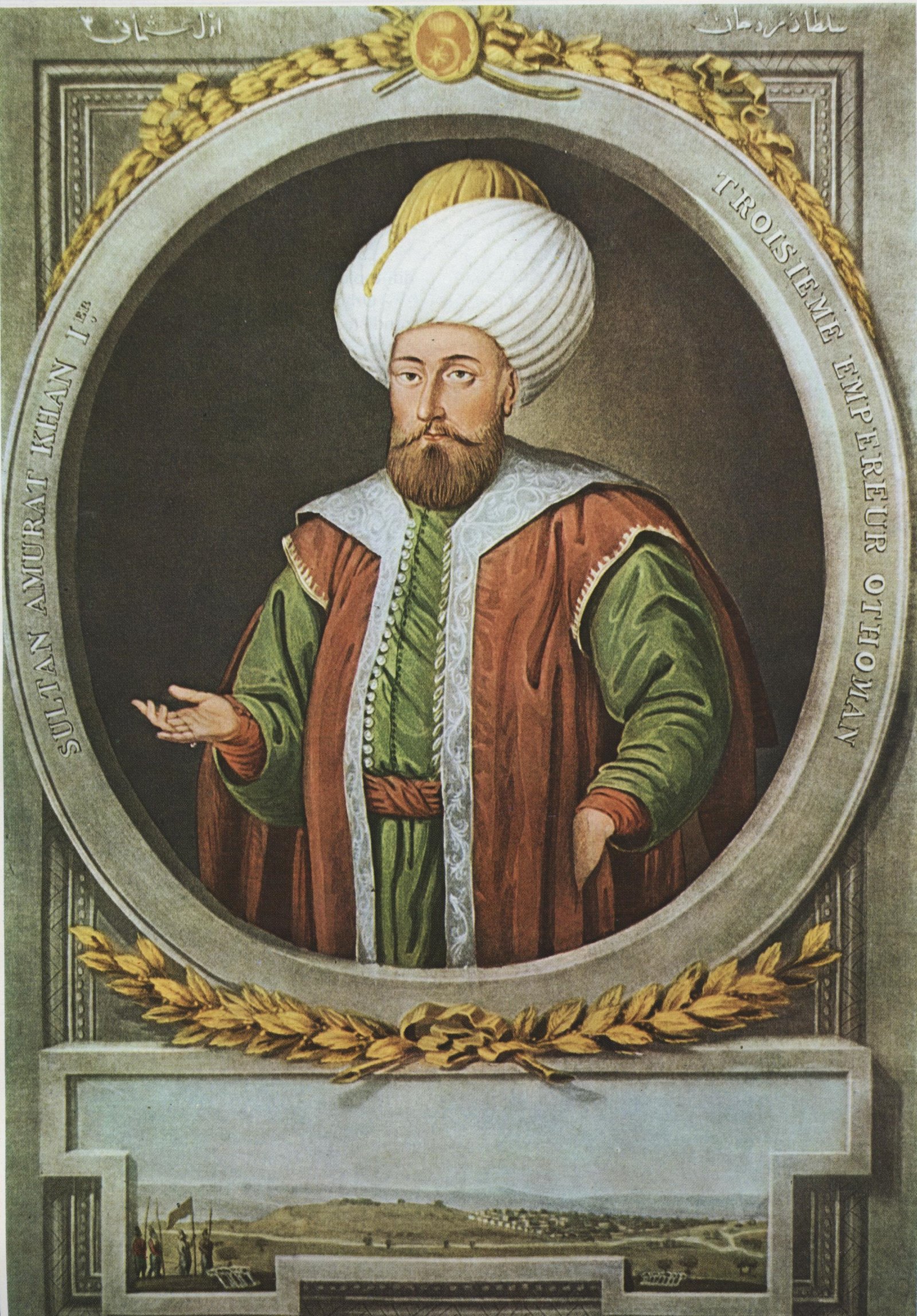
Murad I

They began as an elite corps of slaves recruited from young Christian boys from the Balkans and Anatolian through the devşirme system, abolished in 1638. Turkish children nor Jews were never subject to devşirme. Later on, the Janissaries could enrol their own children in the corps after the devşirme system was abolished by sultan Murad III.

They wore unique uniforms, were paid, marched to music, lived in barracks and were the first corps to make extensive use of fire arms. During the initial period of formation, Janissaries were expert archers, but they began adopting firearms as soon as they became available during the 1440s. They also served as policemen, palace guards and fire fighters in peace time.

Recruitment
After a non-muslim boy was recruited, he was sent to selected Turkish families to learn how to speak Turkish, the rules of Islam and the customs and cultures of Ottoman society. After this, boys were trained in Enderun school at the capital city. They were selected for their talents in different areas to train as engineers, artisans, riflemen, clerics, archers, artillery, etc. They trained under strict discipline and in practically monastic conditions. Unlike other muslims, they were expressly forbidden to wear beards, only a moustache.
For all practical purposes, Janissaries belonged to the sultan and they were regarded as the protectors of the throne and the sultan. They were taught to consider the corps their family and the sultan their father.
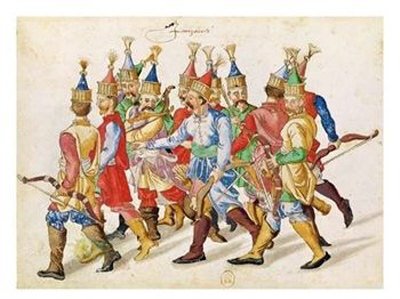
janissaries

The corps
The corps was organised in ortas (equivalent to a battalion). While the sultan was the supreme commander of the Ottoman army and of the Jannissaries in particular, the corps was organised and led by a commander. The corps was divided into 3 sub-corps:
– The cemaat, frontier troops with 101 ortas.
– The beyliks or beulukus, the sultan’s own bodyguard with 61 ortas.
– The sekban or seirnen, with 34 ortas.

The ottoman empire used the Janissaries in most of its campaigns, including the capture of Constantinople, the defeat of the Egyptian Mamluks and war against Hungary and Austria. They were always led to battle by the sultan and had a share of the loot. In battle, their mission was to protect the sultan.

The corps was abolished in 1826 by sultan Mahmud II. The main reason for their decline seemed to be a decrease in discipline as they’d grown accustomed to a civilian life.


How to make a basic longbow from scratch

Common wood used to make bows:
– Red Oak
– Yew
– Ash
– Bamboo
– Osage
– Ipe
– Black Locust

To make a longbow, our best options is yew. Although it is quite expensive is ideal for longbows.

The #1 rule when making any bow, is not to use power tools. This slows down the process a bit, but makes it more difficult to make fatal mistakes.

Common tools used to make bows:
– Draw knife
– Spoke shave
– Cabinet scrapers
– Fine wood file
– Sandpapers

The first thing we need to do is the initial shaping of the bow. We have bought a piece of wood which doesn’t look like a bow at all. Most of the wood will need to be removed and it will be done in this initial shaping stage.
Once you’ve removed around 2lb of wood, you’ll need to draw a central line and the rough outline of the bow as a guide.
The main characteristic of this stage is that, at the end of it, you will be able to see the shape of the bow but the wood would be still too thick to bend.
Now it’s time to shape the longbow. Work from the centre towards the tips. Define the D shaped cross section. Define the cuts for the bowstring to fit in and define the handling area.
The only thing remaining is to check the draw length which should be 28″ as standard.
To know your draw length, you have to put your arms away in the shape of a “T”. One person has to measure from middle finger on the right hand to the middle finger on the left hand. Divide the resulting number by 2.5 to know your draw length.

Here are a couple of extended guides on how to make your own longbow:
– http://www.instructables.com/id/How-to-make-a-layered-oak-bow-or-How-NOT-to-make-/?ALLSTEPS
– http://www.instructables.com/id/How-to-make-a-red-oak-bow-start-to-finish/

– http://poorfolkbows.com/oak.htm

– http://www.greenmanlongbows.co.uk/

What is a World Record Status Shoot?

It must have a National Judge in charge. In the UK the shoot will have been registered with Archery GB. The tournament details are published in Archery UK.


You need to shoot at World Record Status shoots in order to gain a ranking. You can see worldwide rankings on the World Archery website here.


https://worldarchery.org/world-ranking


It is a goal for many people to feature on the Target Archery Rankings for Archery GB. There is a link to the annual rankings on their website here :

http://www.archerygb.org/7499.php


Rankings are determined via points and for ‘recurve archers, the points represent each archer’s best two ladies/gents WA 1440 rounds and best three WA 70m rounds all from shoots with World or UK Record Status; in addition recurve archers are required to shoot an associated Olympic round but the score is not included in the total.

For barebow and longbow archers, the points represent each archer’s best two ladies/gents WA 1440 rounds and best three WA 70m rounds all from shoots with World or UK Record Status.’


As long as you complete this requirement you WILL get a national ranking – which is obviously exciting! In 2016 ladies recurve placed down to position 124. Ladies longbow placed down to 26. Gents recurve placed to position 204 and Gents Barebow to position 18.

What weight bow is needed to shoot 70m?

Well, there are lots of things to take into consideration – you should shoot the highest poundage that you can comfortably control. There is some evidence that you could go as low as around the 30lb mark depending on the following points (see next paragraphs). In my experience most people will be shooting around 36lb+.


In addition to increasing your limb weight (which might involve a few trips to the gym but will definitely involve a lot of practicing with your set up) there are a lot of additional things that you can do to help yourself gain the maximum possible shooting distance for the lowest poundage of limbs. It is easier to shoot more efficient limbs so you may be able to control more weight with less exertion if you spend a bit more money (OK maybe quite a lot more money). For example Border limbs explain it thus, “At Border we offer a synthetic composite core and is denoted by an H in the HEX6.5 (discontinued) and HEX6.6 model series. This offers approximately 4fps to 8fps more arrow speed than their multi-laminated bamboo/wood equivalent. This difference is roughly equivalent to 1lb to 1.5lbs of bow weight performance… the choice of core will not affect the draw-force curve at all, the draw-feel will remain the same irrespective to the core material chosen.”


http://www.borderbows.com/ilf-limbs-by-core-c88.html


Arrows also make a huge difference – the faster and lighter the arrow the further it will easily and accurately go. You want the best spin wings, curly vanes, G nocks and something made out of carbon (you won’t be shooting Jazz arrows at 70m).


Spend a lot of time tuning your bow (we still like the Simon Needham book ‘Steps to Success’ for this). You want the most efficient string (e.g. fast flight) and you’ll want some Beiter nock points.

Why are there two holes for my arrow rest?

Quick info-tel post here. I’ve been asked this question a number of times by beginner archers and I always feel like saying to them, ‘You know we’ll talk about that later.’ And somehow ‘later’ never comes.

So, the answer, of course, is that one is for you to line up your arrow rest into the correct position and the other one is for your pressure button. And what, then, is a pressure button?

The quick answer is that it is a small ‘button’, that pushes through the riser in the middle of your arrow rest which has a spring inside that can be set to be more soft or more firm in order to help fix the archer’s paradox. But, if you’re reading about the archer’s paradox for the first time that doesn’t help much. So, what’s the best way to explain it? As you release your arrow it has to bend to clear it’s way around your riser. Unlike a slingshot where you can pull back the sling and have nothing in the way between the missile and target, with a bow and arrow as you draw the string back and point the arrow at the target you’ll find that you have a riser / bow right in front of where you’re shooting.

So, the arrow needs to bend around the riser – and there are some amazing slow motion videos (especially the ones by Beiter) showing it doing just that. Without a pressure button the arrow will bend as far as it can and as far as it needs to according to how good your release is, how bendable your arrows are (the spine) and the force with which you are releasing them (the weight of the bow).

Installing a pressure button helps to achieve two things – it helps to correct the archer’s paradox (as far as possible) and it helps you to get the perfect ‘tune’ to your arrows by allowing more or less bend in the arrow shaft and it also allows you to set the ‘centre shot’ – basically the optimum position for pointing the arrow down range that will give it the most help to snake its way around the riser.

So, that is the very basic start of an answer about taking your first steps in tuning. For more information I recommend taking a look at The Archer’s Reference Guide (free although they’re grateful for donations) or, if you have a bit of cash to spend and you’re willing to go into some depth, the best book on the subject is Simon Needham’s The Art of Repetition – along with the companion DVD.

Part 1: Getting your first bow? – How do I make this decision among all the choices

What was it that got you into archery in the first place? Were you inspired by Katniss Everdeen from the Hunger Games, watching the Olympics, the competition and social environment of the club or was it something you have always wanted to do and finally came round to doing!  Whatever the reason, there comes a stage where you want to buy your first bow! The excitement and extensive choice, will make one feel like a child in a sweet store. For some it might even be overwhelming, whilst others might become a little on the hyperactive side…

To help you feel that you have a better understanding of what would work for you and complement your style, you should consider the 4 P’s:

Purpose, Progression, Price and Preference.

PURPOSE – What is my purpose and goal of shooting?

There is a big difference between what an Olympic archer would invest in and hobbyist shooting every once in a while in their backyard. There are many reasons why people learn to shoot whether it is for recreation, hunting, to competing at differing levels, from inhouse club competitions to national standards. This will have a significant influence in the style of kit you will buy and many of the features that your require in your bow.

PROGRESSION – How long do you think you will keep the bow for?
A big misconception with new archers is that they need to start with a cheap entry level bow. The reality is that you can skip this, especially if you have been learning using club or rented equipment. Bows are meant to last forever like your sturdy steed, but for different reasons archers will buy other bows. They might want to improve their performance with a more specialized bow or attain a bow that is more personalised (Neon green maybe). Therefore you might want to consider if this bow will give you the ability to progress and how long you can see yourself shooting this style of bow.

PRICE – What is my budget?

Naturally this will make a significant difference on what choices you have when purchasing your first bow. I wouldn’t advise rushing and buying the cheapest bow you can find online, as you might end up feeling ripped-off and even end up tarnishing your experience of archery.We definitely wouldn’t want that happening to you. Yet, you don’t have to burn a hole in your pocket to get a good quality and appropriate bow to fit you!

Depending on how quickly you wish to progress to a new bow (maybe even another style) you might be willing to spend less money than if you wish to invest in a single bow that you will be using for many years down the line (you might even pass it onto your kids!). Remember to include in your budget the required accessories such as arrows, quiver, fingers tabs and bracers which you will need.

Understandably, some people are often afraid to spend a lot of money on a bow, when they are not confident that they will stay with the sport or be cash strapped. A way to cut costs is by going second hand or ebay (see our earlier blog on: www.2020archery.co.uk/blog/should-i-buy-second-hand-archery-gear/ ), but be careful, do your research and ask club members or instructors for advice if you are unsure. Yet the more confident you are with your commitment, the more you will save in the long term with better equipment, as you will begin to develop and grow into a better bow sooner.

PREFERENCE – Is there a particular style you wish to shoot?

Archery has a spectrum of styles and there’s nothing wrong opting for a traditional bow than for a snazzy Olympic recurve. It is important you buy the style of bow you want to use, because at the end of the day you will be shooting it. The bow must feel right from both an aesthetic perspective ( yes that is important many people might not want to shoot a neon green bow) to the functionality for your chosen style of shooting.

Before you click the “buy it now“  button it is important that you consider the above categories and have done your research. The internet is an amazing source of information and so are our club members, instructors and local archery stores (We recommend **** in London). Please remember to check your clubs rules and regulations,before purchasing your bow, as there will be specific guideline on draw weight, types of arrows etc…. that are allowed to be shot.  If you have done your research and are confident about which bow you want, then what are you waiting for!

Why do some archers shoot with a tab not a glove?

Your hands are one of the most important elements in archery. They are the crucial connection between archer and bow. Correct hand positioning can be the difference between hitting the golden ten… or the neighbouring target. Your hands and fingers as an archer are arguably your most important asset (and indeed in life!). It is therefore essential that one wears protection to prevent any blisters, numbness and nerve damage, whilst also aiding your string release and performance as far as possible. Therefore every archer, whether Olympic gold medallist or novice, will need to work out some finger protection. But how do you choose from the multitude of styles available?

One of the deciding factors which will help with this decision, is determining the style of archery you wish to pursue. When shooting a traditional style bow, gloves are inherently more advantageous. They provide superb protection through reinforced fingertips (particularly helpful for bows with a heavy draw weight) and as gloves tend to be made out of thick leather, they therefore provide product longevity. For practicality purposes, gloves give the archer the ability to be “hands-free” to do other things, such as, retrieve arrows (or rearrange their Robin Hood hats). Many traditional archers not only feel that it synchronizes with their style of going “old school”, but that there is a more intuitive, natural release when shooting with a glove.

That said, the most common finger protection among archers is the finger tab. Modern Olympic-style shooters will find the tab the most universal piece of equipment. A basic finger tab is simply a piece of leather with a retaining loop or holes to keep the tab in position. More upgraded versions might have a platform, plate and/or a spacer. Although from the perspective of protecting your fingers tabs may be thinner than gloves, this does give the archer more sensitivity allowing them to innately fine tune and reflect on their release. Importantly, tabs provide a smoother release by having a lower friction surface, ensuring the least interference with your arrows. Many tab designs, such as the shelf tab, will further ensure this by stopping the archer from pinching the arrow (which is what makes for that frustrating arrow swing whilst drawing back). Many archers also find that their shooting becomes more accurate when using a shelf tab as it allows them to anchor the string better with their fingers.

All in all, gloves and fingers tabs basically do the same thing, with subtle differences. Gloves and tab products have a range of price points, they aren’t an expensive investment and they are usually one of the first pieces of equipment a beginner archer will buy. Although the style of archery tends to inform the style of finger protection, there is no reason why an archer cannot shoot a traditional bow with a tab or an Olympic-style recurve with a glove. Archery is very personal and therefore it is important that you ask yourself, which elements resonate with you. Consider the following criteria when choosing: protection, sensitivity, smoothness of release and practicality.

And finally as with everything else in archery we tend to teach what works best for the majority of people. There’s a reason that no-one has ever won an Olympic gold medal shooting a freestyle recurve with a lovely tooled leather glove. Conversely if you shoot a hunting style American flatbow you’re going to pick up somewhat strange looks if you’re rocking a Cavalier Elite Cordovan top of the range shelf tab while trying to master your instinctive ‘at one with the arrow’ shooting style.

Finger Tab

Archery Glove


Should I buy second hand archery gear?

As we’re coming up to Christmas it seemed like a good time to tackle this question which we often get asked at the club.

Is it ever a good idea to buy second hand archery gear?

Well, I think the short answer is,

“Yes! Sometimes it can be a good idea… but sometimes it can be a terrible idea.”

So, what do you need to look out for?

Just like buying anything else from ebay / Craigs List etc – don’t spend more than you could afford to possibly lose. Ebay isn’t too bad because you have the paypal guarantee and their feedback system is pretty awesome. (Obviously as long as you do check the feedback of the person who is selling!).

What you may not realise if you’re inexperienced though, is that a lot of us have seen basic, second hand equipment actually sell on ebay for more than it’s worth new! So make sure you’ve thoroughly priced up whatever you’re looking at through a reputable store. Exceptions to this are things listed in the wrong categories and left handed bows. There just aren’t as many ‘special people’ (i.e. lefties) out there so trying to get rid of a left handed 36lb Seb Flute recurve with all its accessories is just that little bit harder than getting rid of a right handed one.

Which brings us to… make sure you are absolutely sure of what the person is selling and preferably engage in conversation with them. They shouldn’t have any issue in telling you when they bought the gear / where they bought it from, what club they shot at, what they’re upgrading to and if they experienced any issues with the kit. If it isn’t listed as left handed or right handed you probably don’t want it! It’s fine to buy gear from an experienced archer that has moved on in the sport and is ready to sell off their old pre-loved kit.. but that’s just it. Is it pre-loved? If it’s something found in the back of a garage or, worse, on the road side or, worse still, stolen… then you do not want it.

So, what could go wrong? Well, it could be not at all what you expect. This can be fixed by only buying locally and arranging to have a look first. It can also – usually – be fixed by a good back and forth with an honest seller, looking at the pictures carefully and doing your research.

The biggest issue with buying old or vintage gear is probably twisted or warped limbs. Depending on the type of bow it may be worth the money and taking the risk of having some issues – or you may end up with a potentially dangerous bow taking up space in your garage instead of theirs! As a sub-set of this you need to think about whether you are qualified to know whether it’s safe and – if not – is there anyone available to help you once you’ve bought it?

Most clubs will at least have a few experienced archers available to help you out even if there isn’t a qualified coach to spare.. but no-one will be thrilled to see you turn up with something that was probably not in great shape in 1973, and now has everyone double checking their liability policies…

The last thing is to say that when using ebay, if you can possibly restrain yourself, try not to bid until the last ten seconds. I personally love esnipe but, of course, you can always set an alarm and do it manually for free!

Merry Christmas and Happy Shopping!

What is a WA 1440 competition?

We were just about to hit send on a club newsletter telling people about the latest WA1440 competition and we suddenly thought, ‘What if I was a novice archer? Would I have any clue what a ‘WA’ (World Archery) or WRS (World Record Status) competition and what does 1440 even mean?’ So we wrote this just for you…….

A WA1440 is a metric round (as opposed to Imperial) where you shoot 3x dozen arrows (36) at 90m, followed by 3x dozen arrows at each of the following distances: 70m, 50m and 30m.

36x arrows at each distance gives a total of 144 arrows shot… each arrow is worth a maximum ten points and – therefore – a maximum score of 1440 points can be achieved.

The ladies 1440 (also known as a Metric 1) is 3x dozen (36 arrows) shot at 70m, 60m, 50m and 30m.

The longer distances (90m and 70m for men and 70m and 60m for women) are shot at a 122cm target face, the shorter distances (50m and 30m for both) are shot at an 80cm target face.


This round uses the world archery rules of shooting and uses 10 zone scoring (generally speaking, probably the one you’re used to!).

There is a really comprehensive guide to Scoring and Tournaments on the Archery GB website here : http://www.archerygb.org/tools/documents/12ScoringTournaments3-[14276].pdf


What do I need to know to go to a 1440 competition?

  • You need to be a member of Archery GB (previously called GNAS or Grand National Archery Society) this can be organised through your club and costs approximately £40. This will get you your own insurance for shooting at any other Archery GB / GNAS club, and it will get you on the mailing list for the regular Archery UK magazine which has details of other competitions.
  • You need to wear green or white and it has to be the specific green prescribed by Archery GB (covered in the Rules of Shooting Point 307 ‘a’ – you can read more here) or club colours (2020 Archery club colours are navy blue shirt and black trousers). Footwear must be completely enclosed (Rules of Shooting 307 ‘b’ in case you were wondering).

You must have practiced in advance at these distances and, as a rough indication, you’ll need to be shooting a bow which has at least 30+ lb limbs to reach 70m accurately.

Ask the Experts – Why do people put twists in their bowstring?

This is a great question and something that is often confusing for beginners. It’s all to do with something called ‘Brace Height’ which is the distance between the bow and the bowstring. You usually measure this from the button (hole in the riser near the arrow rest if there isn’t an actual button yet) to the string using a bow square. There will be a general guide for each individual riser – this is a starting point. From the starting point (usually around 8.5-9” for a 68” bow.. can be slightly less for a shorter bow and 9-9.5” for a 70”) you then need to do some basic tuning to determine what the perfect brace height for your bow is.


bow square


Couple of things :


1. You should always have the SAME brace height. If you lose ½” of brace height you might lose 20 points on a Portsmouth (or more). Remember that archery is “the art of repetition” and its all about reducing variation. Check your brace height at the start of every shoot.


2. Putting in twists will make the string effectively shorter (think about twisting up a piece of string) which will increase the brace height; taking twists out will effectively give you a longer string and therefore smaller brace height.


To do the tuning – start with the lowest sensible brace height and shoot 3 arrows. Take off string and put in a few twists (you’ll probably need to miss an end to do this). Re-measure brace height and shoot 3 arrows. Listen to the noise the string makes and note your grouping. If you have a bad end and you know you shot badly you might want to repeat another 3 arrows at the same brace height. Keep doing this until you have explored the full range (8”ish to 9.5”ish). You should find two ‘sweet spots’ where the bow sounds quietest and shoots the best – one will be at the lower end of the range and one will be at the higher end of the range. I’ve never been madly successful with hearing this.. but you can usually tell that the bow just feels better. Choose the higher brace height out of the two not the lower. Remember this or mark it down somewhere.


Store the string by doing a simple loop through loop knot (any experienced archer can quickly show you how to do this) in order not to lose twists and have to start from scratch the next time you shoot.


Here’s a little You Tube video I found showing this : http://youtu.be/em_BP1uz2Gw?t=32s


Quick tip : you know that the brace height is too low if the string hits your wrist. As longbows need a much lower brace height than recurves the string ALWAYS smashes into your wrist. This is why longbow archers wear much thicker arm guards and they tend to be worn much lower down the arm.


Nocked Longbow


P.S. its also a good idea to check the brace height on club bows. We try and check them as often as we can.. but the more club members take the responsibility the better they’ll shoot. Just ask an instructor where the nearest bow square is.