Author Archives: 2020

Robin of Locksley

The tale of Robin Hood has been told in verse, story and film across the centuries. The legend is basically a collection of stories concerning a group of outlaws who risk life and limb to steal from the rich and give to the poor. Robin, a lovable rogue with a longbow and a quiver of arrows on his back, is always at the centre of the action with his band of Merry Men as the supporting cast. Love interest is provided by the beautiful Maid Marian often depicted as having a double life – a rebellious warrior chick in the forest choosing Robin and the outlaws whenever she can get away from the embroidery and dancing that, as a lady, she is supposed to be enjoying. The story centres around archery (Marian is often shown, especially in screen versions, as being a pretty accomplished archer herself) and epitomises for many of us how awesome skills with a longbow can get you out of trouble (and make you a hit with the ladies / is a good alternative to embroidery).


The story begins with Robin, a Saxon nobleman, living near the castle in the city of Nottingham. The city is ruled by Prince John, who has taken over while his brother, King Richard, is off fighting the Crusades. No-one seems to know whether Richard is alive or dead, his return is always hoped for but in his absence evil Prince John takes advantage of his new authority by teaming up with the equally nasty Sheriff of Nottingham. Between them they attempt to transfer as much money as possible from the people of Nottingham into their own coffers. As taxes keep rising and punitive laws are enacted to dissuade anyone from challenging them, the people of Nottingham are left with barely enough to feed themselves or keep a roof over their heads. As the story takes place following the Norman conquest of Britain the story also makes much of the evil (French) conquerors against the plucky British (Saxon) underdogs. 

Robin, hungry and struggling to survive (in some versions Robin himself is newly returned from the Crusades to find the family home burnt down and his family dead), is caught hunting royal deer with his longbow and is outlawed from the city. With no home, money or possessions, he’s left to fend for himself in Sherwood Forest which lies just outside the city. Robin’s skill at hunting, and his personal charisma, helps him to befriend other outlaws. They eventually form a full camp with various roles and skills in the group. The stories of how Little John, later to be Robin’s right hand man, and Will Scarlet come to join him are amongst the most famous of the tales. 

After months of futile fighting, with Robin and his men successfully stealing back taxes and storing food for the poor villagers, evil Prince John and the Sheriff of Nottingham are determined to arrest him. Knowing of Robin’s skill with the longbow and aware of his desire to fight for the rights of the Saxons, they stage an archery contest to trick him into coming back – illegally – into the city of Nottingham. Disguised as a peasant, Robin enters the city and enrols for the contest, determined to win the Silver Arrow prize. He easily makes it through to the final shoot-out, but his impressive skill alerts the Sheriff and his men who are on the look-out for Robin. With his Merry Men disguised amongst the crowd of Saxon peasants watching the contest, Robin’s first shot of the final hits gold. Little John, seeing that the Norman knights are moving in on Robin, tells the crowd that Robin is a fellow Saxon, and the best archer in the land. The crowd begins to cheer for him, distracting the knights and disrupting their movements. As Robin looses his final arrow, splitting the shaft of his previous ‘perfect 10’ and thereby winning the contest, Prince John signals to his knights to take him. Reacting quickly Little John shouts to the crowd to lift up the winner. A hooded Robin, is held aloft by the crowd. In the melee the outlaws manage to carry him straight through the Norman knights. As Robin is returned to the ground his bow is hidden once again and, with the help of his friends, he slips out of the city unnoticed. Robin and his men return to their camp deep in Sherwood Forest to celebrate their victory, as evil Prince John and the Sheriff of Nottingham are thwarted once again. 

Modern day Robin Hood

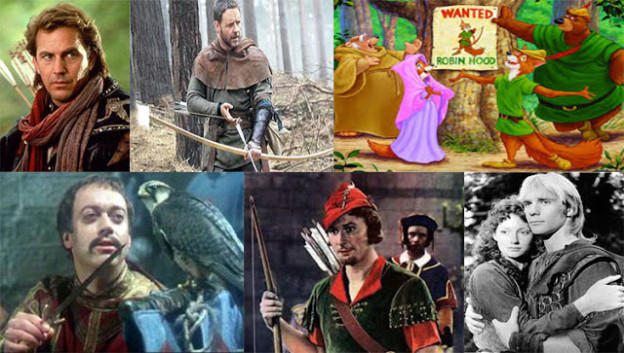
The incredible visual appeal of archery has probably contributed to the ongoing ‘Rise of Robin’ with versions of him or the stories featuring in movies, games and on television (although we’re currently enjoying the tales of Merlin and Prince Arthur – another traditional English failsafe that also, happily, tends to feature archery practice). There have been countless depictions of the courageous Robin in the past 70 years, with the feature film, Robin Hood (2010) featuring Russell Crowe (“you’ve got dead ears mate. Bollocks.”) being the most recent. But not the best. 


The story’s revival has done particularly well in the last ten years thanks to the most recent BBC series,which followed Robin and his Merry Men for 3 years. Your age probably determines which version of Robin you find the most recognisable – the glossy mulleted Michael Praed is sadly the one for me. Kevin Costner (also with a mullet, albeit shorter, and, err, more bleached) runs a close second. 

One of the most loved depictions of the story is Disney’s animated feature, which used a cast of animals to tell the popular tale. 


The music of Robin Hood

Even seeing this picture makes you start humming no?


And, if all that Robin Hood goodness has really got you in the mood here’s the Karaoke version : 

Robin of Locksley

The tale of Robin Hood has been told in verse, story and film across the centuries. The legend is basically a collection of stories concerning a group of outlaws who risk life and limb to steal from the rich and give to the poor. Robin, a lovable rogue with a longbow and a quiver of arrows on his back, is always at the centre of the action with his band of Merry Men as the supporting cast. Love interest is provided by the beautiful Maid Marian often depicted as having a double life – a rebellious warrior chick in the forest choosing Robin and the outlaws whenever she can get away from the embroidery and dancing that, as a lady, she is supposed to be enjoying. The story centres around archery (Marian is often shown, especially in screen versions, as being a pretty accomplished archer herself) and epitomises for many of us how awesome skills with a longbow can get you out of trouble (and make you a hit with the ladies / is a good alternative to embroidery).


The story begins with Robin, a Saxon nobleman, living near the castle in the city of Nottingham. The city is ruled by Prince John, who has taken over while his brother, King Richard, is off fighting the Crusades. No-one seems to know whether Richard is alive or dead, his return is always hoped for but in his absence evil Prince John takes advantage of his new authority by teaming up with the equally nasty Sheriff of Nottingham. Between them they attempt to transfer as much money as possible from the people of Nottingham into their own coffers. As taxes keep rising and punitive laws are enacted to dissuade anyone from challenging them, the people of Nottingham are left with barely enough to feed themselves or keep a roof over their heads. As the story takes place following the Norman conquest of Britain the story also makes much of the evil (French) conquerors against the plucky British (Saxon) underdogs. 

Robin, hungry and struggling to survive (in some versions Robin himself is newly returned from the Crusades to find the family home burnt down and his family dead), is caught hunting royal deer with his longbow and is outlawed from the city. With no home, money or possessions, he’s left to fend for himself in Sherwood Forest which lies just outside the city. Robin’s skill at hunting, and his personal charisma, helps him to befriend other outlaws. They eventually form a full camp with various roles and skills in the group. The stories of how Little John, later to be Robin’s right hand man, and Will Scarlet come to join him are amongst the most famous of the tales. 

After months of futile fighting, with Robin and his men successfully stealing back taxes and storing food for the poor villagers, evil Prince John and the Sheriff of Nottingham are determined to arrest him. Knowing of Robin’s skill with the longbow and aware of his desire to fight for the rights of the Saxons, they stage an archery contest to trick him into coming back – illegally – into the city of Nottingham. Disguised as a peasant, Robin enters the city and enrols for the contest, determined to win the Silver Arrow prize. He easily makes it through to the final shoot-out, but his impressive skill alerts the Sheriff and his men who are on the look-out for Robin. With his Merry Men disguised amongst the crowd of Saxon peasants watching the contest, Robin’s first shot of the final hits gold. Little John, seeing that the Norman knights are moving in on Robin, tells the crowd that Robin is a fellow Saxon, and the best archer in the land. The crowd begins to cheer for him, distracting the knights and disrupting their movements. As Robin looses his final arrow, splitting the shaft of his previous ‘perfect 10’ and thereby winning the contest, Prince John signals to his knights to take him. Reacting quickly Little John shouts to the crowd to lift up the winner. A hooded Robin, is held aloft by the crowd. In the melee the outlaws manage to carry him straight through the Norman knights. As Robin is returned to the ground his bow is hidden once again and, with the help of his friends, he slips out of the city unnoticed. Robin and his men return to their camp deep in Sherwood Forest to celebrate their victory, as evil Prince John and the Sheriff of Nottingham are thwarted once again. 

Modern day Robin Hood

The incredible visual appeal of archery has probably contributed to the ongoing ‘Rise of Robin’ with versions of him or the stories featuring in movies, games and on television (although we’re currently enjoying the tales of Merlin and Prince Arthur – another traditional English failsafe that also, happily, tends to feature archery practice). There have been countless depictions of the courageous Robin in the past 70 years, with the feature film, Robin Hood (2010) featuring Russell Crowe (“you’ve got dead ears mate. Bollocks.”) being the most recent. But not the best. 


The story’s revival has done particularly well in the last ten years thanks to the most recent BBC series,which followed Robin and his Merry Men for 3 years. Your age probably determines which version of Robin you find the most recognisable – the glossy mulleted Michael Praed is sadly the one for me. Kevin Costner (also with a mullet, albeit shorter, and, err, more bleached) runs a close second. 

One of the most loved depictions of the story is Disney’s animated feature, which used a cast of animals to tell the popular tale. 


The music of Robin Hood

Even seeing this picture makes you start humming no?


And, if all that Robin Hood goodness has really got you in the mood here’s the Karaoke version : 


Dan – Traditional Bows : a Beginner’s Guide to Wooden Longbows

I got my first traditional bow last year and I was happily hooked soon thereafter. Even if I am wielding something that is more usually found in the gloomier regions of the Amazon Rainforest in an indoor hall near London Bridge it’s still rather a lot of fun! I soon decided to look into buying something better. What followed were many weeks trawling through the internet looking at random bits of tree and talking to some spectacular beards, and as such I thought it might be worth passing on some useful little tips which I picked up. 

Modern traditional bows are an oxymoron as they are normally made up of 2 or 3 layers of wood called laminates. This is because different parts of the bow require different technical properties, specifically the ability to withstand compression or tension, and it’s impossible for one type of wood to do both equally well. Laminate bows therefore utilise woods with different types of properties in different parts of the bow which makes them better but more expensive than single piece self-bows.

Your bowyer will be able to give you detailed expert advice on the best types of wood to use and different bowyers prefer different types of wood. The following however is a good starter for 10, regardless of whether you go for an off-the-shelf bow or a more tailored one.

Bellywood. The belly of the bow is the part of the bow which is closest to the archer, and requires a wood which is capable of withstanding compression. The most common bellywood is Lemonwood which is cheap to use and found in most traditional bows. It won’t last more than a couple of years though before it starts to have a bend in it called string-follow, but it is excellent for a first traditional bow. [NB according to many bowyers, string-follow actually improves the performance of a bow, so like wine your bow will improve with age!]

Other bellywoods include Ipe, Yew, Osage Orange and Putu Jumau. Each of these is excellent under compression making them ideal for the belly of a bow, if in doubt, go for the one whose colour you like best – a traditional bow can, and indeed should, be something beautiful.

Corewood. The core or middle of the bow is the foundation of the bow and is typically made of a very hard wood, indeed the harder the better. The most common are Purpleheart or Greenheart which are excellent corewoods and, because of their availability, they are cheap.

Other corewoods include Balau [“harder than the knockers of hell” as one chap colourfully described it], Ipe, Yew, Padauk, Bubinga, Snakewood and a whole host of other woods I have never heard of – as with bellywood if in doubt go with the one whose colour you like best. 

You will note that Yew and Ipe, and indeed several others, can be used as both core and belly woods, in such a case you would end up with a bi- as opposed to a tri-laminate bow. 

Backwood. The back of the bow is the part of the bow furthest from the archer and requires a wood which is capable of withstanding tension. By far the best backwood is Bamboo, which unfortunately is also the most expensive. If you are buying a tailored bow, it is worth sacrificing cost elsewhere in the bow to be able to have a Bamboo back. Hickory or Maple are also perfectly good choices for heavy (60lb’s or more) and lighter bows respectively.

Traditional bows come in a whole host of different types, shapes and sizes from delicate flat bows to 140lb warbows, each of which however will incorporate the ideas discussed above. Go on give it a go, you won’t regret it!

Dan – Traditional Bows : a Beginner’s Guide to Wooden Longbows

I got my first traditional bow last year and I was happily hooked soon thereafter. Even if I am wielding something that is more usually found in the gloomier regions of the Amazon Rainforest in an indoor hall near London Bridge it’s still rather a lot of fun! I soon decided to look into buying something better. What followed were many weeks trawling through the internet looking at random bits of tree and talking to some spectacular beards, and as such I thought it might be worth passing on some useful little tips which I picked up. 

Modern traditional bows are an oxymoron as they are normally made up of 2 or 3 layers of wood called laminates. This is because different parts of the bow require different technical properties, specifically the ability to withstand compression or tension, and it’s impossible for one type of wood to do both equally well. Laminate bows therefore utilise woods with different types of properties in different parts of the bow which makes them better but more expensive than single piece self-bows.

Your bowyer will be able to give you detailed expert advice on the best types of wood to use and different bowyers prefer different types of wood. The following however is a good starter for 10, regardless of whether you go for an off-the-shelf bow or a more tailored one.

Bellywood. The belly of the bow is the part of the bow which is closest to the archer, and requires a wood which is capable of withstanding compression. The most common bellywood is Lemonwood which is cheap to use and found in most traditional bows. It won’t last more than a couple of years though before it starts to have a bend in it called string-follow, but it is excellent for a first traditional bow. [NB according to many bowyers, string-follow actually improves the performance of a bow, so like wine your bow will improve with age!]

Other bellywoods include Ipe, Yew, Osage Orange and Putu Jumau. Each of these is excellent under compression making them ideal for the belly of a bow, if in doubt, go for the one whose colour you like best – a traditional bow can, and indeed should, be something beautiful.

Corewood. The core or middle of the bow is the foundation of the bow and is typically made of a very hard wood, indeed the harder the better. The most common are Purpleheart or Greenheart which are excellent corewoods and, because of their availability, they are cheap.

Other corewoods include Balau [“harder than the knockers of hell” as one chap colourfully described it], Ipe, Yew, Padauk, Bubinga, Snakewood and a whole host of other woods I have never heard of – as with bellywood if in doubt go with the one whose colour you like best. 

You will note that Yew and Ipe, and indeed several others, can be used as both core and belly woods, in such a case you would end up with a bi- as opposed to a tri-laminate bow. 

Backwood. The back of the bow is the part of the bow furthest from the archer and requires a wood which is capable of withstanding tension. By far the best backwood is Bamboo, which unfortunately is also the most expensive. If you are buying a tailored bow, it is worth sacrificing cost elsewhere in the bow to be able to have a Bamboo back. Hickory or Maple are also perfectly good choices for heavy (60lb’s or more) and lighter bows respectively.

Traditional bows come in a whole host of different types, shapes and sizes from delicate flat bows to 140lb warbows, each of which however will incorporate the ideas discussed above. Go on give it a go, you won’t regret it!

Archery for Beginners

Archery is one of the fastest growing sports in the UK. Open to all, archery can be enjoyed by young and old, people with disabilities and whole families (2020 has a great junior club with Mums and Dads shooting alongside young people each weekend – www.juniorarchery.co.uk). 

As a sport that can be practiced inside or outside throughout the year, socially or competitively, archery can really be said to cater for everyone. Over here at 2020 Archery we currently have 1 completely blind club member and 1 with significant visual impairment. We’ve also had a number of wheelchair users and people with mobility issues as members in the past. 

Forms of archery

Target archery: this is the most popular form of archery in the UK and the style that is currently featured in the Olympic games (although the Olympic version is somewhat different than regular competitions). Target archery takes place on flat ground – indoor or outdoor – and involves shooting a specific number of arrows at particular sizes of target faces at 

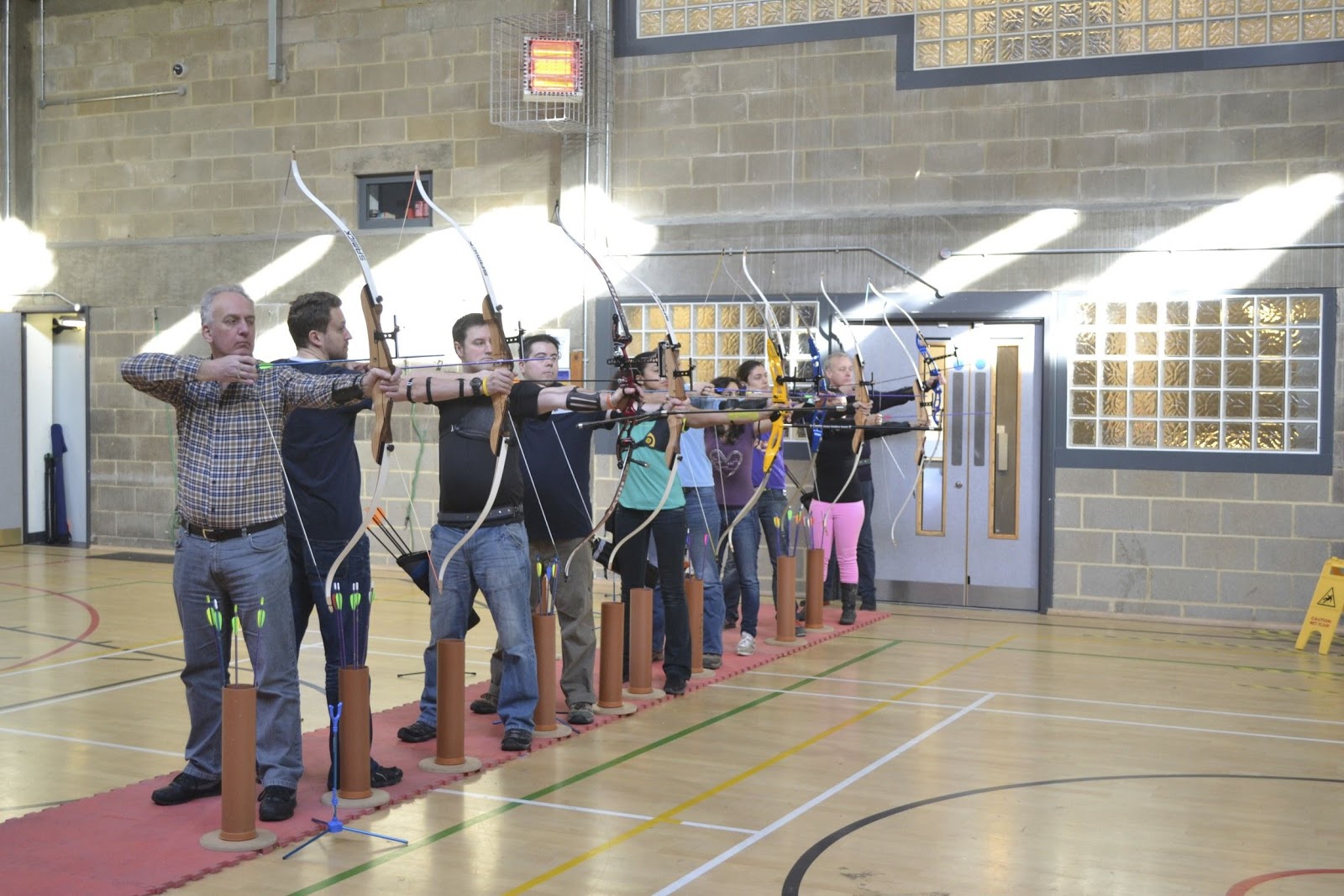
distances of up to 100 yards. This type of archery can also take place inside over shorter distances. Indoor archery – like we do at 2020 – typically sees us shooting 5x dozen arrows at 60cm target faces for a score out of 600 at 20 yards. You can see our club members scores on the club website here (http://www.2020archery.co.uk/club-6/)


Field archery: this form of archery takes place on a series of targets set out in outside locations, often in woodland. The shooting distances are usually unmarked so archers rely on their judgement and instinct, especially if they choose to use a traditional bow such as a longbow or flatbow. Saying that, I also know a number of compound archers who also enjoy this type of more ‘natural’ shooting.  

Clout archery: this form of archery is similar to target archery but the archer must drop the arrows at a long range into a number of circular scoring zones on the ground. Arrows are shot at an angle of around 45 degrees up into the air. This type of archery probably emulates the kind of military training that used to take place when an enemy might be a known distance away (e.g. approx 150 yards) and accuracy at the specified distance could mean victory or defeat.  

Flight archery: requiring a lot of space, flight archery is a sport in which the archer must shoot the arrow as far as possible. This is generally done in very specific categories for weights and types of arrows shot from specific bows. James Farrar of Fairbow holds a number of flight records using very heavy traditional bows known as warbows – he also sells great traditional archery gear which we like a lot over at 2020 (http://www.fairbowuk.com/). 

Getting involved 

There are a number of ways that you can get involved in archery but the best place to start is your local club. Most clubs are very welcoming to beginners (as long as you’ve made an appointment or booked a session) and many offer Have-a-Go sessions. This gives newcomers the opportunity to try out the sport before enrolling in a beginners course and – hopefully – becoming a member and starting to practice with the club. 

Although clubs often welcome beginners, it is important to have a basic understanding of the sport before you try to join a club or start practicing.  Most clubs will offer structured beginners courses to set up would-be archers with the basic skills and techniques required. The course can take place across a number of weeks or over a weekend and gives new archers the opportunity to join an archery club for further training and the chance to compete in tournaments if they want to. 

Archery for Beginners

Archery is one of the fastest growing sports in the UK. Open to all, archery can be enjoyed by young and old, people with disabilities and whole families (2020 has a great junior club with Mums and Dads shooting alongside young people each weekend – www.juniorarchery.co.uk). 

As a sport that can be practiced inside or outside throughout the year, socially or competitively, archery can really be said to cater for everyone. Over here at 2020 Archery we currently have 1 completely blind club member and 1 with significant visual impairment. We’ve also had a number of wheelchair users and people with mobility issues as members in the past. 

Forms of archery

Target archery: this is the most popular form of archery in the UK and the style that is currently featured in the Olympic games (although the Olympic version is somewhat different than regular competitions). Target archery takes place on flat ground – indoor or outdoor – and involves shooting a specific number of arrows at particular sizes of target faces at 

distances of up to 100 yards. This type of archery can also take place inside over shorter distances. Indoor archery – like we do at 2020 – typically sees us shooting 5x dozen arrows at 60cm target faces for a score out of 600 at 20 yards. You can see our club members scores on the club website here (http://www.2020archery.co.uk/club-6/)


Field archery: this form of archery takes place on a series of targets set out in outside locations, often in woodland. The shooting distances are usually unmarked so archers rely on their judgement and instinct, especially if they choose to use a traditional bow such as a longbow or flatbow. Saying that, I also know a number of compound archers who also enjoy this type of more ‘natural’ shooting.  

Clout archery: this form of archery is similar to target archery but the archer must drop the arrows at a long range into a number of circular scoring zones on the ground. Arrows are shot at an angle of around 45 degrees up into the air. This type of archery probably emulates the kind of military training that used to take place when an enemy might be a known distance away (e.g. approx 150 yards) and accuracy at the specified distance could mean victory or defeat.  

Flight archery: requiring a lot of space, flight archery is a sport in which the archer must shoot the arrow as far as possible. This is generally done in very specific categories for weights and types of arrows shot from specific bows. James Farrar of Fairbow holds a number of flight records using very heavy traditional bows known as warbows – he also sells great traditional archery gear which we like a lot over at 2020 (http://www.fairbowuk.com/). 

Getting involved 

There are a number of ways that you can get involved in archery but the best place to start is your local club. Most clubs are very welcoming to beginners (as long as you’ve made an appointment or booked a session) and many offer Have-a-Go sessions. This gives newcomers the opportunity to try out the sport before enrolling in a beginners course and – hopefully – becoming a member and starting to practice with the club. 

Although clubs often welcome beginners, it is important to have a basic understanding of the sport before you try to join a club or start practicing.  Most clubs will offer structured beginners courses to set up would-be archers with the basic skills and techniques required. The course can take place across a number of weeks or over a weekend and gives new archers the opportunity to join an archery club for further training and the chance to compete in tournaments if they want to. 

Archery on Horseback

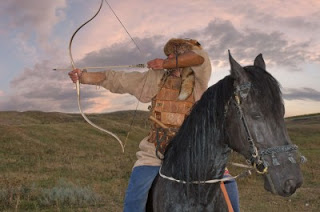
You’d be forgiven for believing that archery on horseback was a thing of the past, a form of iron age hunting and fighting that has long since disappeared. But mounted archery has far from died out. It’s unlikely that it still takes place in the traditional way for hunting or in aggressive situations, but instead it has become a popular sport, with competitions taking place in the UK and across the globe.


A little history

Although it was once a popular method of assault in fast attacking raids, mounted archery was an ineffective defence against massed foot archery in more formalised battle settings. Large numbers of foot archers were able to synchronise attacks on their large targets and achieve a longer range than their mounted enemies. In fact, mounted archery was such an ineffective defence that Mongol archers would often dismount and shoot from a sitting position!

Mounted archery began to disappear in the 17th century when modern firearms became common weapons. During the next century, bows were occasionally used in conjunction with firearms, providing archers with the benefits of both. However, as repeating firearms were developed, mounted archers were removed from battle completely.


After Mongolian independence in 1921, mounted archery enjoyed a resurgence as a cultural display at festivals showcasing Mongolian heritage. Its instant popularity – and huge visual appeal – sparked a worldwide interest and mounted archery began to be reintroduced across the world. 

Competitions today

Nowadays, mounted archery is a rapidly growing equestrian sport, popular in a large number of countries including the UK, the USA, Germany, China and Korea. The sport has come a long way from its origins and now uses a light weight (under 50 Ib) bow and a guided track to keep the horse straight.  

There are a number of annual competitions held all over the world, with the largest held in Korea. In order to embrace the sport’s history, competitors often wear the traditional clothing and use traditional bow and arrows rather than those used in modern foot archery.

In general, the competitions are split into two groups: Korean style and Hungarian style. The Hungarian style involves one run on which the archer must hit three targets from three different angles, the reverse angle being the most difficult (obviously!). The Korean style involves three different runs that vary in difficulty, the hardest being the 5-shot serial run which requires the competitor to loose the arrows quickly between targets. All mounted competitions include time penalties and points for accuracy making it a difficult balance between completing the course in the allotted time – and actually hitting stuff. 

The Korean style competitions also include a game called Mogu. In Mogu, the mounted archer must chase after a ball being dragged by another horse. They are required to shoot at the ball with ink-dipped arrows and the number of ink stains is counted to determine the score. This also requires a horse with nerves of steel (or good protection at the back – not sure I’d want to try this one myself unless I’d got a LOT of practice in)! 

Getting in to mounted archery

Many mounted archery beginners start out as horse riders with an interest in picking up archery. If you have previous horse riding experience, a few beginners’ archery lessons may be all you need before you’re ready to start competition training with your local club. 

For those with no previous horse riding experience, regular non-mounted archery is a great place to start. Taking part in a beginner’s course gives you the opportunity to try out the sport or archery in general while picking up the basic skills needed for mounted archery. For information about 2020 Archery’s Have A Go sessions where you can get started for only £20, click through to our main website here https://www.2020archery.co.uk/lessons-courses/have-a-go or call 0203 130 6797.

Archery on Horseback

You’d be forgiven for believing that archery on horseback was a thing of the past, a form of iron age hunting and fighting that has long since disappeared. But mounted archery has far from died out. It’s unlikely that it still takes place in the traditional way for hunting or in aggressive situations, but instead it has become a popular sport, with competitions taking place in the UK and across the globe.


A little history

Although it was once a popular method of assault in fast attacking raids, mounted archery was an ineffective defence against massed foot archery in more formalised battle settings. Large numbers of foot archers were able to synchronise attacks on their large targets and achieve a longer range than their mounted enemies. In fact, mounted archery was such an ineffective defence that Mongol archers would often dismount and shoot from a sitting position!

Mounted archery began to disappear in the 17th century when modern firearms became common weapons. During the next century, bows were occasionally used in conjunction with firearms, providing archers with the benefits of both. However, as repeating firearms were developed, mounted archers were removed from battle completely.


After Mongolian independence in 1921, mounted archery enjoyed a resurgence as a cultural display at festivals showcasing Mongolian heritage. Its instant popularity – and huge visual appeal – sparked a worldwide interest and mounted archery began to be reintroduced across the world. 

Competitions today

Nowadays, mounted archery is a rapidly growing equestrian sport, popular in a large number of countries including the UK, the USA, Germany, China and Korea. The sport has come a long way from its origins and now uses a light weight (under 50 Ib) bow and a guided track to keep the horse straight.  

There are a number of annual competitions held all over the world, with the largest held in Korea. In order to embrace the sport’s history, competitors often wear the traditional clothing and use traditional bow and arrows rather than those used in modern foot archery.

In general, the competitions are split into two groups: Korean style and Hungarian style. The Hungarian style involves one run on which the archer must hit three targets from three different angles, the reverse angle being the most difficult (obviously!). The Korean style involves three different runs that vary in difficulty, the hardest being the 5-shot serial run which requires the competitor to loose the arrows quickly between targets. All mounted competitions include time penalties and points for accuracy making it a difficult balance between completing the course in the allotted time – and actually hitting stuff. 

The Korean style competitions also include a game called Mogu. In Mogu, the mounted archer must chase after a ball being dragged by another horse. They are required to shoot at the ball with ink-dipped arrows and the number of ink stains is counted to determine the score. This also requires a horse with nerves of steel (or good protection at the back – not sure I’d want to try this one myself unless I’d got a LOT of practice in)! 

Getting in to mounted archery

Many mounted archery beginners start out as horse riders with an interest in picking up archery. If you have previous horse riding experience, a few beginners’ archery lessons may be all you need before you’re ready to start competition training with your local club. 

For those with no previous horse riding experience, regular non-mounted archery is a great place to start. Taking part in a beginner’s course gives you the opportunity to try out the sport or archery in general while picking up the basic skills needed for mounted archery. For information about 2020 Archery’s Have A Go sessions where you can get started for only £20, click through to our main website here https://www.2020archery.co.uk/lessons-courses/have-a-go or call 0203 130 6797.

How to Improve Your Archery

We get a steady trickle of requests about additional coaching to help you progress once the beginners course is finished. Often these requests come very soon after completing the beginners course and there are a few things that we’d recommend you try first. 

We do offer advanced coaching either as a 1 to 1 or if you can gather together 4 people that want a weekly group coaching session for 4x weeks we can arrange it (but we don’t put together the groups ourselves). http://www.2020archery.co.uk/club


  • Secondly, buy some books and magazines! We like Fundamentals of Recurve Archery, Steps to Success (a bit American) and The Art of Repetition by Simon Needham. The Art of Repetition is particularly good for bow tuning if you’ve just bought some kit (and has a DVD available as well). The best magazine out there is called Bow International – they have lots of features on coaching and improving your shooting.


  • Make friends! If two of you can team up you can observe each other’s performance and give very worthwhile feedback, even if you’re a novice. You might not spot everything but you can check the basics of drawing position, release and stance. Even for more experienced archers just having someone step back and look at you (even better film a few arrows of each other shooting and watch them back together) can be hugely helpful.


  • Get out and about cont’d. Aim4Sport do some great continued coaching. It costs about £30 for a 1 hr one to one or you can book 6 sessions for £150. You’ll probably be able to get some outdoor experience as well if you can get up there (Bedfordshire) and get some longer distances under your belt. http://www.aim4sport.com/archery-lessons/coaching/


  • Join Archery Interchange UK (AIUK) – it’s a web forum for archers and you can make some friends, get some advice (obviously not all advice will be useful) and perhaps join in some competitions / leagues. The more archery you do and see the better you’ll get. Sometimes you just have to launch into the wider community and get a bit immersed. Archery is all about developing muscle memory and making the commitment to practice – you’ll progress much faster by using the above resources and shooting 3 times/week, than by spending the money on 1 to 1’s every week for 6 months. http://www.archeryinterchange.com/forum


  • If you’ve done all this and you’d still like one of our instructors to work with you we can arrange 4x 1hr sessions for £250. We know this is expensive but our costs are really high compared to other clubs and this isn’t really something that we specialise in (i.e. we aren’t set up like the shops where they have people who’s time needs to be filled – we have to organise and book everything individually and people – including administrators – need realistic payment for this). You can ask for a particular instructor and as long as they aren’t working we’ll try and get you hooked up. The 4 lessons must be taken within a 6 month period and can’t be carried over. Sorry but we can’t offer discounts, ‘half a course’ or sharing with a mate etc. It’s important to us that we can really deliver something useful for you and this seems to be the best way for us to do that. We can also arrange an intermediate course if you have a group of 4 people who can agree on 4 dates to book. Intermediate courses cost £100pp.  

Remember the thing that will help your shooting most of all is to practice! Practice a lot and I PROMISE you will improve!

Best of luck and Happy Shooting!!

How to Improve Your Archery

We get a steady trickle of requests about additional coaching to help you progress once the beginners course is finished. Often these requests come very soon after completing the beginners course and there are a few things that we’d recommend you try first. 

We do offer advanced coaching either as a 1 to 1 or if you can gather together 4 people that want a weekly group coaching session for 4x weeks we can arrange it (but we don’t put together the groups ourselves). http://www.2020archery.co.uk/club


  • Secondly, buy some books and magazines! We like Fundamentals of Recurve Archery, Steps to Success (a bit American) and The Art of Repetition by Simon Needham. The Art of Repetition is particularly good for bow tuning if you’ve just bought some kit (and has a DVD available as well). The best magazine out there is called Bow International – they have lots of features on coaching and improving your shooting.


  • Make friends! If two of you can team up you can observe each other’s performance and give very worthwhile feedback, even if you’re a novice. You might not spot everything but you can check the basics of drawing position, release and stance. Even for more experienced archers just having someone step back and look at you (even better film a few arrows of each other shooting and watch them back together) can be hugely helpful.


  • Get out and about cont’d. Aim4Sport do some great continued coaching. It costs about £30 for a 1 hr one to one or you can book 6 sessions for £150. You’ll probably be able to get some outdoor experience as well if you can get up there (Bedfordshire) and get some longer distances under your belt. http://www.aim4sport.com/archery-lessons/coaching/


  • Join Archery Interchange UK (AIUK) – it’s a web forum for archers and you can make some friends, get some advice (obviously not all advice will be useful) and perhaps join in some competitions / leagues. The more archery you do and see the better you’ll get. Sometimes you just have to launch into the wider community and get a bit immersed. Archery is all about developing muscle memory and making the commitment to practice – you’ll progress much faster by using the above resources and shooting 3 times/week, than by spending the money on 1 to 1’s every week for 6 months. http://www.archeryinterchange.com/forum


  • If you’ve done all this and you’d still like one of our instructors to work with you we can arrange 4x 1hr sessions for £250. We know this is expensive but our costs are really high compared to other clubs and this isn’t really something that we specialise in (i.e. we aren’t set up like the shops where they have people who’s time needs to be filled – we have to organise and book everything individually and people – including administrators – need realistic payment for this). You can ask for a particular instructor and as long as they aren’t working we’ll try and get you hooked up. The 4 lessons must be taken within a 6 month period and can’t be carried over. Sorry but we can’t offer discounts, ‘half a course’ or sharing with a mate etc. It’s important to us that we can really deliver something useful for you and this seems to be the best way for us to do that. We can also arrange an intermediate course if you have a group of 4 people who can agree on 4 dates to book. Intermediate courses cost £100pp.  

Remember the thing that will help your shooting most of all is to practice! Practice a lot and I PROMISE you will improve!

Best of luck and Happy Shooting!!