Author Archives: 2020

Ask the Experts : What’s the Difference Between a ‘Recurve’ Bow and a ‘Traditional’ Bow?

So, we’ve decided to move our occasional “Ask the Expert” series away from facebook and onto our blog. Mainly because our experts (our instructors) are chronically unable to write a short answer when asked anything about archery. Be warned if you’re at the club and you start a query with, “Quick question…” it might be a quick question but it’s usually a lengthy answer!


So, this “Ask the Experts” is from Roger (well done Roger!) and gives an account of the differences between Recurve Bows (as used in the modern Olympics), Longbows (think Agincourt, Robin Hood etc), Horsebows (the short ones with leather webbing around them that you sometimes see in the club) and finally a little bit on crossbows. Please do add any other “Ask the Experts” questions in the comments below – we love talking bows and arrows!


Over to Roger :


“The difference between a modern recurve bow, a long bow and a horse bow is fundamentally one of curves and materials.


When unstrung an English (or Welsh or Scottish) long bow was – and is – a straight stave (wooden pole) with a D shaped cross section where the flat part faces away from the archer. They are typically 3” longer than the archer is tall.  When strung, the bow takes a regular uniform curve towards the archer. They were traditionally made either from using several layers of different woods laminated together, or from a single stave of wood (self-bows). Laminated bows are made using woods that favour compression on the belly of the bow (the side that faces the archer), and woods that stretch well on the back of the bow (the side that faces the target). Self-bows tend to be slower and weaker although self bows made of yew or osage orange can be stronger as it is possible to find differing qualities of compression and tensional strength in a single stave, providing the same benefits as a laminated bow. The advantage of the long bow design is that it can be made very strong and can be tensioned to very high draw weights. In some cases these bows can reach over 180lb in draw weight (usually known as war-bows) – this allowed bowyers to manufacture bows that were capable of shooting an arrow through medieval plate armour at ranges as far as fifty yards or more.


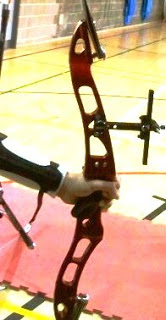
The modern recurve bow is so called because the limb-tips of the bow ‘re-curve’ back away Recurve Bow in Clubfrom the archer after the usual longbow curve. They usually have a static (unbending) riser and curved limbs. They also have a window cut into the bow to allow the arrow to take a straighter path through the bow. The window helps with accuracy as it allows the use of a stiffer arrow that can fly straighter than those released from a traditional bow where the arrow must bend itself back around the bow as its released in order to reach the target. The rationale behind the limbs “re-curving” away from the archer at the tips is so that the very ends of the limbs can be accelerated faster than the rest of the limb – this results in energy being transferred more efficiently. Ultimately this results in faster arrow speeds and improved accuracy on the target. Modern recurve bows are now typically fitted with various accessories such as artificial sights, stabilisers and vibration dampers to provide a more consistent shot.


The horse bow or reflex bow is the original recurve bow. They were common in Eastern European countries, the Middle East and throughout Asia and parts of Africa in pre-gunpowder days. They are characterised by their short length and exceptionally recurved limbs. When unstrung a traditional horse bow will curve away from the archer forming a complete C shape, but in some instances are so flexible that the limb tips almost touch forming an O shape. Their short profile made them highly successful as hunting bows (as they’re more manouverable than longer bows). They were originally made of wood laminated with horn and animal sinew although today they may be made with synthetic materials which make the bow cheaper to make and easier to use.


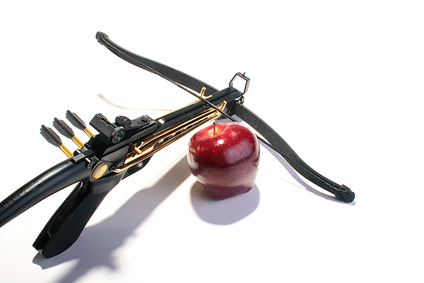
Finally, while we’re thinking about traditional bows, a crossbow can be loosely described as a Crossbowshort bow that is allowed to lie horizontally on a stock from which position it can have an arrow loaded and released using a trigger mechanism in a similar configuration to a rifle. The main advantage of a crossbow as a weapon is that once the string is drawn back it can be locked into place until the trigger is pulled. This allows the weapon to be loaded without being pointed at the target and without requiring any extra energy to be held at full draw for extended periods of time. Crossbows typically have much higher draw weights as the hold is done mechanically. Drawing or ‘cocking’ the bow can also be achieved with mechanical assistance by using a cocking aid. This means that bows over 100lb may be loaded with the aid of a winch by a single person. Cross bow limb design covers most types of bow shape and materials ranging from un-recurved basic wood through reflexed horn and sinew, to space-age material and radical modern design.”
As well as Target Archery there are many other disciplines that use both / all types of bows. You can get involved in everything from clout shooting, Archery Tag, field archery, bowfishing and the curiously named ‘Popinjay’ shoots… but what they all are will be for another post…!

As always, comments and questions are welcomed and suggestions for other “Ask the Experts” are especially useful!

Ask the Experts : What’s the Difference Between a ‘Recurve’ Bow and a ‘Traditional’ Bow?

So, we’ve decided to move our occasional “Ask the Expert” series away from facebook and onto our blog. Mainly because our experts (our instructors) are chronically unable to write a short answer when asked anything about archery. Be warned if you’re at the club and you start a query with, “Quick question…” it might be a quick question but it’s usually a lengthy answer!


So, this “Ask the Experts” is from Roger (well done Roger!) and gives an account of the differences between Recurve Bows (as used in the modern Olympics), Longbows (think Agincourt, Robin Hood etc), Horsebows (the short ones with leather webbing around them that you sometimes see in the club) and finally a little bit on crossbows. Please do add any other “Ask the Experts” questions in the comments below – we love talking bows and arrows!


Over to Roger :


“The difference between a modern recurve bow, a long bow and a horse bow is fundamentally one of curves and materials.


When unstrung an English (or Welsh or Scottish) long bow was – and is – a straight stave (wooden pole) with a D shaped cross section where the flat part faces away from the archer. They are typically 3” longer than the archer is tall.  When strung, the bow takes a regular uniform curve towards the archer. They were traditionally made either from using several layers of different woods laminated together, or from a single stave of wood (self-bows). Laminated bows are made using woods that favour compression on the belly of the bow (the side that faces the archer), and woods that stretch well on the back of the bow (the side that faces the target). Self-bows tend to be slower and weaker although self bows made of yew or osage orange can be stronger as it is possible to find differing qualities of compression and tensional strength in a single stave, providing the same benefits as a laminated bow. The advantage of the long bow design is that it can be made very strong and can be tensioned to very high draw weights. In some cases these bows can reach over 180lb in draw weight (usually known as war-bows) – this allowed bowyers to manufacture bows that were capable of shooting an arrow through medieval plate armour at ranges as far as fifty yards or more.


The modern recurve bow is so called because the limb-tips of the bow ‘re-curve’ back away Recurve Bow in Clubfrom the archer after the usual longbow curve. They usually have a static (unbending) riser and curved limbs. They also have a window cut into the bow to allow the arrow to take a straighter path through the bow. The window helps with accuracy as it allows the use of a stiffer arrow that can fly straighter than those released from a traditional bow where the arrow must bend itself back around the bow as its released in order to reach the target. The rationale behind the limbs “re-curving” away from the archer at the tips is so that the very ends of the limbs can be accelerated faster than the rest of the limb – this results in energy being transferred more efficiently. Ultimately this results in faster arrow speeds and improved accuracy on the target. Modern recurve bows are now typically fitted with various accessories such as artificial sights, stabilisers and vibration dampers to provide a more consistent shot.


The horse bow or reflex bow is the original recurve bow. They were common in Eastern European countries, the Middle East and throughout Asia and parts of Africa in pre-gunpowder days. They are characterised by their short length and exceptionally recurved limbs. When unstrung a traditional horse bow will curve away from the archer forming a complete C shape, but in some instances are so flexible that the limb tips almost touch forming an O shape. Their short profile made them highly successful as hunting bows (as they’re more manouverable than longer bows). They were originally made of wood laminated with horn and animal sinew although today they may be made with synthetic materials which make the bow cheaper to make and easier to use.


Finally, while we’re thinking about traditional bows, a crossbow can be loosely described as a Crossbowshort bow that is allowed to lie horizontally on a stock from which position it can have an arrow loaded and released using a trigger mechanism in a similar configuration to a rifle. The main advantage of a crossbow as a weapon is that once the string is drawn back it can be locked into place until the trigger is pulled. This allows the weapon to be loaded without being pointed at the target and without requiring any extra energy to be held at full draw for extended periods of time. Crossbows typically have much higher draw weights as the hold is done mechanically. Drawing or ‘cocking’ the bow can also be achieved with mechanical assistance by using a cocking aid. This means that bows over 100lb may be loaded with the aid of a winch by a single person. Cross bow limb design covers most types of bow shape and materials ranging from un-recurved basic wood through reflexed horn and sinew, to space-age material and radical modern design.”

As well as Target Archery there are many other disciplines that use both / all types of bows. You can get involved in everything from clout shooting, Archery Tag, field archery, bowfishing and the curiously named ‘Popinjay’ shoots… but what they all are will be for another post…!

As always, comments and questions are welcomed and suggestions for other “Ask the Experts” are especially useful!

Books – not just good for target practice, you can read them too!

There have been some great books and online resourses written recently on learning archery. These can be a great tool to remind and reinforce the lessons you’ve already been taught during our beginners couse and you’ll learn a whole host new skills to help you become a great archer.
The following books are recommended for someone who has just started in archery hopefully after doing a progressive beginners course (see our courses page for current availability of our great weekend, 3 week ‘Fast Track’ or regular 5 week beginers courses in London Bridge). The best books at this level help you to develop a solid, consistent form without going into deeply technical variations on the standard elements of the shot sequence. All three of the following books provide a clear guide to building a good shot sequence and will help a novice archer achieve good consistent form.
Archery (Steps to Success): Kathleen Haywood (Author), Catherine Lewis (Author) 
 
This is a very good book for people looking for a structured way to become a solid archer. 
  • Thorough – it’s a very thorough book and doesn’t miss out anything that a novice archer needs to know.
  • Easy to follow – provides an easy to follow program of exercises and provides space to record how well you have done on each exercise. A fun and interesting way to learn.
  • Clear illustrations – good clear photos and drawings of each step to help you to conceptualise your body position.
  • Bow tuning – a great section on basic bow tuning so you can get your bow up to speed at the same time as you improve your form.
Other good beginner books to try are:
Archery Fundamentals: A Better Way to Learn the Basics by Douglas Engh (Author)
Less rigidly structured than Steps to success, so is good if you prefer to structure your own training/learning your way.
The Archery For Beginners Guidebook by Archery GB (only available through archery stores, e.g. Clickers, Aim 4 Sport, Merlin etc)
Has a very good guide on archery etiquette and protocols in competitions and in clubs. 
The Following online sources can also be helpful:
KSL International Archery 
This has a very good shot sequence. It’s brief in its description but is free to look at so worth a read. It does get pretty technical though. 
A very popular UK archery forum, this can be a useful recourse for answering specific questions. Although do bear in mind that as it’s a forum there is often lots of arguing that can be distracting and confusing. The loudest voice is also not necessarily the most accurate!
 
These are the ones that I particularly favour but there are many more useful resources out there. Do let us know if you have any other recommendations that you’ve found useful on your archery journey!
Roger – 2020 Archery Instructor

Books – not just good for target practice, you can read them too!

There have been some great books and online resourses written recently on learning archery. These can be a great tool to remind and reinforce the lessons you’ve already been taught during our beginners couse and you’ll learn a whole host new skills to help you become a great archer.
The following books are recommended for someone who has just started in archery hopefully after doing a progressive beginners course (see our courses page for current availability of our great weekend, 3 week ‘Fast Track’ or regular 5 week beginers courses in London Bridge). The best books at this level help you to develop a solid, consistent form without going into deeply technical variations on the standard elements of the shot sequence. All three of the following books provide a clear guide to building a good shot sequence and will help a novice archer achieve good consistent form.
Archery (Steps to Success): Kathleen Haywood (Author), Catherine Lewis (Author) 
 
This is a very good book for people looking for a structured way to become a solid archer. 
  • Thorough – it’s a very thorough book and doesn’t miss out anything that a novice archer needs to know.
  • Easy to follow – provides an easy to follow program of exercises and provides space to record how well you have done on each exercise. A fun and interesting way to learn.
  • Clear illustrations – good clear photos and drawings of each step to help you to conceptualise your body position.
  • Bow tuning – a great section on basic bow tuning so you can get your bow up to speed at the same time as you improve your form.
Other good beginner books to try are:
Archery Fundamentals: A Better Way to Learn the Basics by Douglas Engh (Author)
Less rigidly structured than Steps to success, so is good if you prefer to structure your own training/learning your way.
The Archery For Beginners Guidebook by Archery GB (only available through archery stores, e.g. Clickers, Aim 4 Sport, Merlin etc)
Has a very good guide on archery etiquette and protocols in competitions and in clubs. 
The Following online sources can also be helpful:
KSL International Archery 
This has a very good shot sequence. It’s brief in its description but is free to look at so worth a read. It does get pretty technical though. 
A very popular UK archery forum, this can be a useful recourse for answering specific questions. Although do bear in mind that as it’s a forum there is often lots of arguing that can be distracting and confusing. The loudest voice is also not necessarily the most accurate!
 
These are the ones that I particularly favour but there are many more useful resources out there. Do let us know if you have any other recommendations that you’ve found useful on your archery journey!
Roger – 2020 Archery Instructor

Korea’s Dominance of Olympic Archery

Korea’s rein over archery has been apparent for many years. In 1984, Seo Hyang-Soon became the first Korean archer to win an Olympic gold in the ever-growing sport. Since then, Korea’s hold over the archery world has grown larger, with the country currently boasting 16 medals in half as many Olympic games. But how did Korea become such a formidable opponent in this ancient sport, that over here we tend to think of as historically British?

The history of Korean archery
Archery has been established in Korean since prehistoric times. Used in battle for centuries, the bow and arrow were a vital part of the Korean defence strategy throughout the 1800’s. Unable to keep up with modern firearms, Korea’s use of archery as a defence dropped in the 1900’s. However, with the reinstatement of archery to the Olympic games in 1972 (after its removal in 1920) Korea began training archers in Olympic-style archery and has now been dominating the competition since 1984.
Korea’s focus on archery
Korean children are introduced to archery at a young age and enjoy coaching in the sport throughout primary school. Throughout middle school, high school and university, the lower level archers fade away (but often continue recreational pursuit of the sport in the many ranges across the country) until the best young adults are hired for company teams run by large organisations and businesses.
Archery is so important in Korea that only 30 % of the sports funding is from the Korean Archery Association (KAA) with the rest coming from the countries 33 company teams who provide a wage, pension and career to the archers they hire to compete on behalf of their company. This level of investment ensures that Korea currently has 147 elite archers compared to the extremely small numbers found elsewhere.
To illustrate the level of devotion to the task at hand Korea is famous (at least in archery circles) for having built an exact replica of the Beijing 2008 Olympic archery venue, providing their archers with the opportunity to practice in “the venue” over a year in advance. Huge enthusiastic crowds voluntarily turned up for practice sessions to mimic the busy, pressured environment on the day. This dedication to the sport has clearly paid off, with Korea still proving to be the country to beat in international competitions.
Korea at the Olympics
Korea has held a number of Olympic archery titles for consecutive games. Since the introduction of the team archery event in 1988, the Korean women’s team has retained their team gold for all seven Olympic games. Meanwhile, the men’s team follows closely behind having held theirs for four out of the seven games.
Korea also has a tight hold of the gold in the women’s singles event; in all but the Beijing 2008 Olympic games, Korea has held the women’s gold since 1980, when the Soviet Union’s Keto Losaberidze won in Moscow. In fact, at the London 2012 Olympics, Korea medalled in every event and only missed out on gold in the men’s team competition when they won bronze.
Maybe we should think about forming company teams to try a novel method of giving British archery a bit of a boost? A great starting point (we think!) would probably be to book a 2020 archery corporate event and see how your company team gets on….

Korea’s Dominance of Olympic Archery

Korea’s rein over archery has been apparent for many years. In 1984, Seo Hyang-Soon became the first Korean archer to win an Olympic gold in the ever-growing sport. Since then, Korea’s hold over the archery world has grown larger, with the country currently boasting 16 medals in half as many Olympic games. But how did Korea become such a formidable opponent in this ancient sport, that over here we tend to think of as historically British?

The history of Korean archery
Archery has been established in Korean since prehistoric times. Used in battle for centuries, the bow and arrow were a vital part of the Korean defence strategy throughout the 1800’s. Unable to keep up with modern firearms, Korea’s use of archery as a defence dropped in the 1900’s. However, with the reinstatement of archery to the Olympic games in 1972 (after its removal in 1920) Korea began training archers in Olympic-style archery and has now been dominating the competition since 1984.
Korea’s focus on archery
Korean children are introduced to archery at a young age and enjoy coaching in the sport throughout primary school. Throughout middle school, high school and university, the lower level archers fade away (but often continue recreational pursuit of the sport in the many ranges across the country) until the best young adults are hired for company teams run by large organisations and businesses.
Archery is so important in Korea that only 30 % of the sports funding is from the Korean Archery Association (KAA) with the rest coming from the countries 33 company teams who provide a wage, pension and career to the archers they hire to compete on behalf of their company. This level of investment ensures that Korea currently has 147 elite archers compared to the extremely small numbers found elsewhere.
To illustrate the level of devotion to the task at hand Korea is famous (at least in archery circles) for having built an exact replica of the Beijing 2008 Olympic archery venue, providing their archers with the opportunity to practice in “the venue” over a year in advance. Huge enthusiastic crowds voluntarily turned up for practice sessions to mimic the busy, pressured environment on the day. This dedication to the sport has clearly paid off, with Korea still proving to be the country to beat in international competitions.
Korea at the Olympics
Korea has held a number of Olympic archery titles for consecutive games. Since the introduction of the team archery event in 1988, the Korean women’s team has retained their team gold for all seven Olympic games. Meanwhile, the men’s team follows closely behind having held theirs for four out of the seven games.
Korea also has a tight hold of the gold in the women’s singles event; in all but the Beijing 2008 Olympic games, Korea has held the women’s gold since 1980, when the Soviet Union’s Keto Losaberidze won in Moscow. In fact, at the London 2012 Olympics, Korea medalled in every event and only missed out on gold in the men’s team competition when they won bronze.
Maybe we should think about forming company teams to try a novel method of giving British archery a bit of a boost? A great starting point (we think!) would probably be to book a 2020 archery corporate event and see how your company team gets on….

Affiliating to Archery GB – why would I want to and how should I do it as a 2020 Archery club member?

There are lots of benefits to joining Archery GB – membership is required in order to shoot with most other clubs (although not all) and is also needed to join leagues and enter competitions. If you provide your address you’ll receive the quarterly Archery GB magazine called Archery UK and you can also take part in the highly recommended ‘Personal Performance Courses’ at Lilleshall (details of prices etc are available on the Archery GB website). There are probably lots of other good things as well – have a click around on the Archery GB website for more. 
So, there are 2 different ways of joining Archery GB – one is through your club (in our case 2020 Archery) in which case you MUST also affiliate to Region and County. In our case this is Southern County Archery Society (SCAS) and the County of London Archery Association (CLAA)  – don’t worry about this step we’ll do this automatically for you if you affiliate through us. You can also join Archery GB as a direct member. The main advantages and disadvantages are that you’ll be responsible for renewing each year if you’re a direct member whereas if you join through the club we’ll just contact you and ask if you want to continue as a member through the club with a payment request. The other difference is that there is a price difference. Clubs are able to offer a pro rata payment system for joining at different times of the year but if you join directly there is one fixed price all year round. The fixed price for direct membership is £46 no matter when you join. 

The Archery GB membership year runs from October to October. This makes the total cost for joining through our club 
  • Oct-Dec = £47.50 
  • Jan-March = £38
  • April-June = £28.50 
  • July – Sept = £19 
The fees breakdown of the Archery GB portion is available here http://www.archerygb.org/support/services/join/fees.php – on top of the Archery GB fee we need to charge CLAA fees of £3 to join (at any time of the year), SCAS costs £1.50 to join (at any time of the year) and we charge a £5 admin fee to cover the costs of banking and admin. 

If you’d like to join directly please go to the Archery GB website (link below) where there is a link to download the direct membership form. 


If you’d like to join through 2020 please send an email into the office (enquiries@2020archery.co.uk) with your full address. We will assume you’re ok with us storing this data along with your email address so that we can contact you at renewal time (usually July / August). Once we’ve received your payment we’ll send it off to Archery GB pretty much immediately. Once it arrives with them they’ll process it and your card should arrive – directly from Archery GB – within 2-3 weeks. 

If you are planning to shoot at another club or you’ve registered for a competition we provide a standard Archery GB receipt which we’ll email to you. This should work as evidence that you’ve paid club subs until your card arrives although we recommend that you alert people that you will be bringing a receipt of payment not an actual Archery GB card if you’re pushed for time. 

Finally, we’re happy to answer questions about the administering of how this all works but if you require more detailed information on Archery GB itself (why join, what to expect etc) please go to their website at www.archerygb.org

Affiliating to Archery GB – why would I want to and how should I do it as a 2020 Archery club member?

There are lots of benefits to joining Archery GB – membership is required in order to shoot with most other clubs (although not all) and is also needed to join leagues and enter competitions. If you provide your address you’ll receive the quarterly Archery GB magazine called Archery UK and you can also take part in the highly recommended ‘Personal Performance Courses’ at Lilleshall (details of prices etc are available on the Archery GB website). There are probably lots of other good things as well – have a click around on the Archery GB website for more. 
So, there are 2 different ways of joining Archery GB – one is through your club (in our case 2020 Archery) in which case you MUST also affiliate to Region and County. In our case this is Southern County Archery Society (SCAS) and the County of London Archery Association (CLAA)  – don’t worry about this step we’ll do this automatically for you if you affiliate through us. You can also join Archery GB as a direct member. The main advantages and disadvantages are that you’ll be responsible for renewing each year if you’re a direct member whereas if you join through the club we’ll just contact you and ask if you want to continue as a member through the club with a payment request. The other difference is that there is a price difference. Clubs are able to offer a pro rata payment system for joining at different times of the year but if you join directly there is one fixed price all year round. The fixed price for direct membership is £46 no matter when you join. 

The Archery GB membership year runs from October to October. This makes the total cost for joining through our club 
  • Oct-Dec = £47.50 
  • Jan-March = £38
  • April-June = £28.50 
  • July – Sept = £19 
The fees breakdown of the Archery GB portion is available here http://www.archerygb.org/support/services/join/fees.php – on top of the Archery GB fee we need to charge CLAA fees of £3 to join (at any time of the year), SCAS costs £1.50 to join (at any time of the year) and we charge a £5 admin fee to cover the costs of banking and admin. 

If you’d like to join directly please go to the Archery GB website (link below) where there is a link to download the direct membership form. 


If you’d like to join through 2020 please send an email into the office (enquiries@2020archery.co.uk) with your full address. We will assume you’re ok with us storing this data along with your email address so that we can contact you at renewal time (usually July / August). Once we’ve received your payment we’ll send it off to Archery GB pretty much immediately. Once it arrives with them they’ll process it and your card should arrive – directly from Archery GB – within 2-3 weeks. 

If you are planning to shoot at another club or you’ve registered for a competition we provide a standard Archery GB receipt which we’ll email to you. This should work as evidence that you’ve paid club subs until your card arrives although we recommend that you alert people that you will be bringing a receipt of payment not an actual Archery GB card if you’re pushed for time. 

Finally, we’re happy to answer questions about the administering of how this all works but if you require more detailed information on Archery GB itself (why join, what to expect etc) please go to their website at www.archerygb.org

Pranava : A new bow comes with new challenges

I finally bought a bow! My very own and very first so I thought I’d share the experience. 
I first started shooting in October 2012. I contemplated buying a bow in December but just before I planned to go shopping I went on vacation. When I got back I felt a bit like I was starting all over again. After a couple more useful months of practice (in February 2013), I realised that I was still shooting the 18lb club traIning bow. As I’d been practicing for around 5 months at this point I felt that I could probably manage something a little heavier. So each week I pushed myself a little and in three sessions I moved from 18 to 26lb (still using 2020 Archery bows)!
At the same time as I was increasing the poundage of the bow I started to gather information about equipment to try and make myself look like a knowledgeable buyer and mask (at least some of) my ignorance. So, on a sunny Saturday in March I set off to my nearest archery shop. A number of people had suggested that I should try out different risers so this was my plan. However, once I got to the store I discovered that there were only two risers within my budget (having a budget makes life far simpler). 
The first riser that I tried was pretty awesome, and felt much heavier than the wooden club bow. By the time I tried the second one I was super tired from practicing with the first so it seemed heavier – despite the sales girl insisting that it was in fact lighter than the previous one. Even with the extra weight I thought that the second bow was pretty awesome as well! I basically couldn’t tell the difference at all. Except that the more expensive one was prettier to look at. I thought for a bit… and then thought a bit more… and then decided to buy the pretty one! 
So I ended up with a beautiful red Hoyt Horizon riser and 26lb SF Premium limbs to go with it. I did buy an entire kit, mostly going for the cheaper options where possible. In total I came out with the bow plus 8 Jazz arrows with red/white fletchings, a basic sight, bow-stand, quiver, arm guard, finger tab, arrow puller and bow-stringer. I also bought a backpack as I can’t possibly carry it all without one. Most people told me that the whole thing would take about 3 hours, but I reckon that I did it in only about 30mins! 
I was really eager to try it the next day, but as always seems to happen when I get very excited about something, bad luck followed and I woke up with flu. I had to wait an entire week before I could use my new kit. I turned up to the practice session at my usual time and found that It took me a good quarter of an hour just to fix everything together! I also made a good many mistakes as I did so and required a bit of help! Eventually I managed to get started and it then took me the next half of the session to nail down the sight marks. At this point I realised that shooting a club bow was a lot easier! 
My second attempt was much better. I set up my kit in roughly 10 minutes – and managed to do it completely on my own without help. I also learnt that there is an upper limb and a lower limb and that they are not interchangeable! Ahem. 
I’m now gradually getting to the point where I feel like the bow is right for me and its starting to feel like mine. Just as important as this is learning how to take care of it properly and – easier this one – learning to love it!
If you’re interested in taking the same course that Pranava did she was on the Fast Track Archery course – these courses run throughout the year and cost only £95. https://www.2020archery.co.uk/lessons-courses/saturday-beginners-course

Pranava : A new bow comes with new challenges

I finally bought a bow! My very own and very first so I thought I’d share the experience. 
I first started shooting in October 2012. I contemplated buying a bow in December but just before I planned to go shopping I went on vacation. When I got back I felt a bit like I was starting all over again. After a couple more useful months of practice (in February 2013), I realised that I was still shooting the 18lb club traIning bow. As I’d been practicing for around 5 months at this point I felt that I could probably manage something a little heavier. So each week I pushed myself a little and in three sessions I moved from 18 to 26lb (still using 2020 Archery bows)!
At the same time as I was increasing the poundage of the bow I started to gather information about equipment to try and make myself look like a knowledgeable buyer and mask (at least some of) my ignorance. So, on a sunny Saturday in March I set off to my nearest archery shop. A number of people had suggested that I should try out different risers so this was my plan. However, once I got to the store I discovered that there were only two risers within my budget (having a budget makes life far simpler). 
The first riser that I tried was pretty awesome, and felt much heavier than the wooden club bow. By the time I tried the second one I was super tired from practicing with the first so it seemed heavier – despite the sales girl insisting that it was in fact lighter than the previous one. Even with the extra weight I thought that the second bow was pretty awesome as well! I basically couldn’t tell the difference at all. Except that the more expensive one was prettier to look at. I thought for a bit… and then thought a bit more… and then decided to buy the pretty one! 
So I ended up with a beautiful red Hoyt Horizon riser and 26lb SF Premium limbs to go with it. I did buy an entire kit, mostly going for the cheaper options where possible. In total I came out with the bow plus 8 Jazz arrows with red/white fletchings, a basic sight, bow-stand, quiver, arm guard, finger tab, arrow puller and bow-stringer. I also bought a backpack as I can’t possibly carry it all without one. Most people told me that the whole thing would take about 3 hours, but I reckon that I did it in only about 30mins! 
I was really eager to try it the next day, but as always seems to happen when I get very excited about something, bad luck followed and I woke up with flu. I had to wait an entire week before I could use my new kit. I turned up to the practice session at my usual time and found that It took me a good quarter of an hour just to fix everything together! I also made a good many mistakes as I did so and required a bit of help! Eventually I managed to get started and it then took me the next half of the session to nail down the sight marks. At this point I realised that shooting a club bow was a lot easier! 
My second attempt was much better. I set up my kit in roughly 10 minutes – and managed to do it completely on my own without help. I also learnt that there is an upper limb and a lower limb and that they are not interchangeable! Ahem. 
I’m now gradually getting to the point where I feel like the bow is right for me and its starting to feel like mine. Just as important as this is learning how to take care of it properly and – easier this one – learning to love it!
If you’re interested in taking the same course that Pranava did she was on the Fast Track Archery course – these courses run throughout the year and cost only £95. https://www.2020archery.co.uk/lessons-courses/saturday-beginners-course